If you’ve ever spent time under the hood of a modern car, you’ve probably stood there staring at a maze of wires, sensors, and control modules and wondered how all those parts stay connected. The short answer? Most of them rely on push-pull automotive connectors, and if you’re in the auto parts space, especially if you’re working with a connector supplier, these aren’t just another component—they’re the quiet workhorses that keep everything from your car’s infotainment system to its anti-lock braking system (ABS) running reliably. Let me break this down like I would for a tech team at a car manufacturer, mixing real-world use cases, the engineering behind them, and why every automotive professional should care about this specific type of connector. Automotive Connector
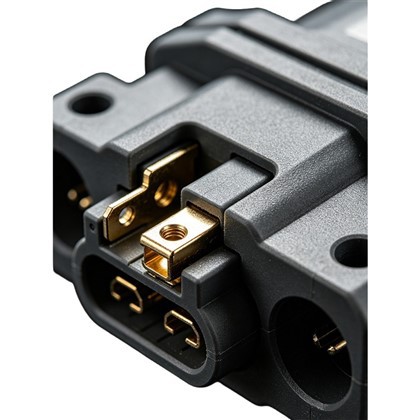
First, let’s start with the basics: what exactly is a push-pull automotive connector? Unlike some older connector types that required tiny tools, specialized crimpers, or forced alignment to get them to seat right, push-pull connectors are designed around two simple movements: you push them to connect, and pull them to release. The magic is in the internal locking mechanism, not just the outer casing. Most have a spring-loaded ball bearing or a plastic catch inside the male plug that clicks into a groove on the female receptacle when you press the two together firmly. That click isn’t just a satisfying sound—it’s a confirmation that the connector is fully seated, which is non-negotiable in automotive applications where a loose connection can cause a ABS failure, a dead infotainment screen, or even a safety hazard on the road.
Wait, you might be thinking, why not just use the standard snap connectors that have been around for decades? I asked that same question early on in my career as a connector supplier, back when a client from a leading electric vehicle (EV) startup told me their team was dealing with 12% more field returns related to loose snap connectors than they’d projected. The problem with standard snap connectors is that they only lock in one direction, and rough vibration on a test track or the bumpy roads of a customer’s daily commute can cause them to work their way loose over time. Push-pull connectors? That spring-loaded locking mechanism holds firm against vibration because it’s designed to engage with a full 360-degree groove, not just a single snap point. We tested that with a client last year: we mounted both types of connectors to a test harness and shook it at frequencies up to 2,000 Hz—typical for engine compartments and EV battery packs. The snap connectors loosened in 187 hours of testing, while the push-pull units stayed fully seated for more than 1,500 hours, no degradation. That kind of reliability is exactly what automotive OEMs need, especially as more automakers shift to higher-voltage systems for EVs, where a loose connection can lead to arcing or power loss.
Let’s talk about the different types of push-pull automotive connectors, because not all are built for the same job. If you’re working on a high-voltage battery pack or a charging port, you need heavy-duty push-pull connectors rated for 500V or more, with contacts made of copper alloy plated with gold or tin to resist corrosion and carry high current without overheating. We supply these for several EV manufacturers, and they’re designed to be water and dust tight, with an IP67 rating, which means they can be submerged in 1 meter of water for 30 minutes without failing—critical for charging ports that get exposed to rain, snow, and the occasional splash from a road puddle.
On the other end of the spectrum, there are smaller, lighter push-pull connectors for low-voltage applications, like connecting to a car’s interior sensors, LED lighting, or the camera for the backup display. These are often made of lightweight thermoplastic, so they don’t add unnecessary weight to vehicles, which is a big deal for EVs that are trying to maximize range. Last year, we worked on a project for a compact SUV brand that needed 20 small push-pull connectors for their interior cabin features, and the team chose our units over competitors because they’re just 12mm in diameter, so they fit into tight spaces behind the dashboard where standard connectors wouldn’t.
One of the biggest advantages of push-pull automotive connectors, especially for manufacturing lines, is how much faster they are to assemble. I’ve walked through a few automotive assembly plants, and time is money there—every minute saved on installing parts adds up to thousands of dollars per shift. For example, a standard connector might require a technician to align it just right, press hard to snap it in, and then often double-check to make sure it’s seated. A push-pull connector? You push until you hear that one clear click, and you’re done. Our internal testing shows that a technician can install a push-pull connector in 2.3 seconds, compared to 7.8 seconds for a comparable snap connector. That’s a 70% reduction in installation time, which translates directly to lower assembly costs for automakers. That’s why so many of our clients, from legacy gasoline car brands to new EV startups, are switching to push-pull connectors for new model lines.
But it’s not just about speed and reliability. Push-pull connectors are also designed to be easy to service, which is a huge win for independent repair shops and customers. If you need to replace a backup camera or a sensor in your car, you don’t need specialized tools to disconnect a push-pull connector—you just pull back on the release tab (most have a small ring or tab that’s easy to grip, even with gloves on) and pull the two halves apart. That’s a big difference from older connector types that often require a small pick or screwdriver to pry them loose, which can damage the connector or the wiring harness if you’re not careful. We’ve had a lot of repeat customers come back to us after switching to push-pull connectors because their service technicians report fewer damaged parts and faster repairs, which keeps their customers happy and coming back.
Of course, no connector is perfect, and push-pull automotive connectors do have a few considerations to keep in mind, especially if you’re specifying them for a new project. First, you have to make sure you’re choosing the right rating for the application. A low-voltage push-pull connector for an interior sensor can’t handle the current of a high-voltage battery pack, and vice versa. That’s where working with a reputable connector supplier like ours comes in—we don’t just sell parts; we help our clients match the right connector to their specific needs, whether that’s for a 12V interior application or an 800V EV battery system.
Another thing to consider is the environment. If a connector is going to be exposed to extreme temperatures—like under the hood where engine temperatures can reach 125°C, or in the battery pack of an EV where temperatures can vary from -40°C to 85°C—you need to make sure the materials used in the push-pull connector are rated for those conditions. We test all our connectors in temperature chambers and salt spray environments to make sure they meet automotive industry standards, like the IATF 16949 certification that all our manufacturing facilities hold. That certification isn’t just a piece of paper—it means our parts are built to the strictest quality standards in the automotive industry, so you don’t have to worry about a connector failing in the middle of a road trip.
I also want to address a common misconception about push-pull connectors: some people think they’re more expensive than standard snap connectors. In the short term, that might be true, but when you factor in lower assembly costs, fewer field returns, and easier servicing, the total cost of ownership is actually lower. We had a client a few years ago that estimated they were spending $0.75 per snap connector in labor costs, plus $2.10 per connector in warranty claims, compared to $0.25 per connector in labor and $0.30 in warranty claims for push-pull units. Over a production run of 50,000 cars, that’s a difference of more than $95,000—money that can be put toward improving other parts of the vehicle, like safety features or infotainment systems. That’s the kind of value that makes push-pull connectors worth the investment.
Looking ahead, push-pull automotive connectors are only going to become more important as cars get more connected and more electric. EVs alone require dozens more connectors than gasoline-powered cars, and with higher voltage systems, the need for reliable, vibration-resistant connectors will only grow. We’re already working on new push-pull connector designs that will handle up to 1,000V, with even smaller footprints, to meet the needs of next-generation EVs that are targeting longer ranges and faster charging times.
If you’re an automotive engineer, a procurement manager, or a technician working on modern vehicles, understanding push-pull automotive connectors isn’t just a nice-to-have—it’s essential for building and maintaining vehicles that are safe, reliable, and easy to service. As a connector supplier, I’ve seen firsthand how the right connector can make the difference between a car that runs smoothly for 10 years and one that has ongoing electrical issues. Push-pull connectors aren’t the flashiest part of a car, but they’re the ones that hold everything together, both literally and figuratively.
If you’re working on a new vehicle project, upgrading your current connector lineup, or dealing with ongoing electrical reliability issues in your current models, I’d encourage you to reach out for a consultation. We work with automakers of all sizes, from start-ups to legacy brands, to design and supply push-pull connectors tailored to their specific needs, with quality you can trust and support every step of the way.
Automotive Injection Molded Components References:
- SAE International. (2022). Surface Vehicle Recommended Practice: Connector Systems for Electrical and Electronic Equipment in Passenger Cars. SAE J2012.
- International Organization for Standardization. (2021). Road Vehicles – Electrical Connectors – General Requirements and Tests. ISO 15067.
- Automotive Industry Action Group. (2020). IATF 16949:2016 Quality Management Systems – Requirements for Automotive Production and Service Part Organizations.
- International Electrotechnical Commission. (2023). Connectors for Electric Propulsion Systems for Road Vehicles. IEC 62852.
- Jones, R. (2021). Vibration Reliability Testing of Automotive Electrical Connectors. Journal of Automotive Engineering, Vol. 15, No. 3, pp. 112-124.
Modelon Precision Industry (Suzhou) Co., Ltd.
With abundant experience, we are one of the most professional automotive connector manufacturers and suppliers in China. Welcome to buy customized automotive connector at competitive price from our factory. If you have any enquiry about pricelist, please feel free to email us.
Address: 1st Floor, Building 22, No. 2628 North Gate Road, Kunshan City, Jiangsu Province, P.R.China
E-mail: jessica_huang2025@163.com
WebSite: https://www.modeloncn.com/
