If you’ve ever worked in the medical injection molding space, chances are you’ve heard the term “flash” thrown around on mold floors, in design review meetings, and in quality control huddles. But for those new to injection medical molding—whether you’re a product engineer, a quality manager, or a procurement lead sourcing components for devices like syringes, IV catheters, or drug delivery devices—understanding exactly what flash is, why it happens, and how to mitigate it is non-negotiable. As a supplier of injection medical molds, I’ve seen first-hand how even a small flash on a part can derail a production run, delay a regulatory submission, or even put a device’s safety at risk. Let’s break this down plainly, no overly jargon-heavy fluff, just what you need to know. Injection Medical Mold

First, let’s define flash in the context of medical injection molding, because it’s not the same as the flash you might know from, say, plastic toy molding or general consumer goods. In medical molding, flash is a thin, unwanted excess layer of plastic that forms along the parting line of the mold—the line where the two halves of the mold meet to shape the part. It’s different from other molding defects like short shots (incomplete parts) or sink marks (indentations from uneven cooling) because it’s actually material that has oozed out of the mold cavity into that narrow gap between mold halves. For medical parts, this isn’t just a cosmetic issue: flash can contaminate a sterile device, catch on packaging during assembly, or even break off and enter a patient’s body if it’s on a component of an implantable or injectable device. That’s why regulators like the FDA and ISO 13485 have strict guidelines for allowable flash sizes on medical parts—usually no more than 0.02 mm for critical components, sometimes even less.
Now, why does flash happen? It’s a chain reaction of small factors, each tied to mold design, process control, or material choice, and as a mold supplier, we see the same culprits over and over. Let’s start with mold design, because that’s where a lot of flash issues start before production even begins. The parting line of a medical mold has to be precision-machined to a tight tolerance—if the two halves of the mold are even 0.01 mm out of alignment, that’s enough gap for molten plastic to squeeze out. That’s why, when we build a mold for a medical part, we use high-grade tool steel and precision CNC machining with tolerances as tight as 0.005 mm. We also add mold locks (or alignment pins) to hold the two halves perfectly aligned during injection, which is a small add-on that prevents most alignment-related flash. Another design factor: venting. Molds need small vents along the parting line to let trapped air escape during injection, otherwise the air compresses and creates pressure that pushes the mold halves apart, causing flash. If vents are too small, they don’t work; if they’re too large, they let plastic through. Getting vent size right is a balance we test during mold qualification, often running a few trial shots with the same material the customer will use to nail the vent dimensions.
Next up: process parameters, which are the knobs operators adjust on the molding machine, and even small tweaks can make a big difference. The most common process-related cause is injection pressure. Medical-grade plastics are often dense, and operators might crank up the injection pressure to fill every nook and cranny of a delicate part, thinking it will improve quality. But too much pressure forces molten plastic through the smallest gaps in the mold parting line, creating flash. Temperature also plays a role: if the molten plastic is too hot, it’s thinner and flows more easily, so it can squeeze out gaps that would stop a cooler, thicker plastic. Conversely, if the mold temperature is too low, the plastic cools too fast and doesn’t fill the cavity evenly, leading to both short shots and sometimes flash as operators ramp up pressure to compensate. Then there’s clamping force: the machine that holds the mold halves together (the clamping unit) needs enough force to resist the pressure of the injected plastic. If clamping force is too low, the mold will separate slightly during injection, and flash forms. It’s a simple equation: more injection pressure requires more clamping force to counteract it. We spend a lot of time during mold setup with customers to calibrate these parameters, not just set a one-size-fits-all number, because even two parts that look similar (say, a 3cc syringe and a 5cc syringe) will need slightly different settings based on their wall thickness.
Material choice is another, often overlooked, factor. Medical molding uses a wide range of materials: PP (polypropylene) for syringes, PVC for IV tubes, COC (cyclic olefin copolymer) for diagnostic components. Some materials are more prone to flash than others. For example, amorphous materials like COC are thinner when molten, so they flow easier and are more likely to seep into small gaps than semi-crystalline materials like PP. That’s why, when we design a mold for a COC part, we add extra venting or a slightly tighter parting line tolerance compared to a PP part for the same application. Also, material consistency: if a batch of plastic has too much leftover moisture or additives that reduce viscosity, it will flow more easily, increasing flash risk. We always advise customers to work with validated, medical-grade materials, not generic alternatives, because even a small change in material formulation can lead to unexpected flash on the production floor.
Now, why is flash such a big deal in medical injection molding specifically? Let’s talk about the real-world impacts that go beyond just having to trim extra plastic off parts. First, regulatory compliance. The FDA, as part of its 21 CFR Part 820 (Quality System Regulation) for medical devices, requires that all parts meet design specifications, and flash that exceeds allowable limits is considered a deviation from those specifications. If a customer’s device is going through a 510(k) submission, any unaddressed flash issues can lead to the FDA requesting additional testing, which delays time-to-market by weeks or months. For Class III devices (like implantable pacemaker components), even minor flash can lead to a full hold on the submission until the issue is resolved. Then there’s product safety: flash is a foreign material, and for sterile single-use devices, it can trap bacteria or contaminants in the gap between the main part and the flash, making sterilization ineffective. For devices that come into contact with bodily fluids, flash can break off during use and cause infection, or even block a narrow catheter lumen. We’ve worked with a customer who had to scrap 12,000 IV catheters because a batch of parts had flash small enough to break off and cause vein blockages—costing them over $50,000 in material and labor, not to mention the reputation hit.
Then there’s operational inefficiency. Trimming flash off parts is an extra step that adds labor time, and for high-volume production (like 10 million syringes a month), that can add up to hundreds of hours of work. Some customers use manual trimming, which is error-prone, or automated debulking systems, which are expensive to maintain. Flash also leads to more defective parts, increasing scrap rates. If a mold is prone to recurring flash, downtime for cleaning or adjusting the mold can derail production schedules, especially if the customer is on a tight delivery timeline for a clinical trial or a nationwide supply order.
So, what can be done to prevent flash, and how can a good injection medical mold supplier help? Let’s break this down into actionable steps that we implement for every customer. First, at the mold design stage: precision machining of the parting line, mold locks for alignment, properly sized vents, and a parting line location that avoids any areas where flash would be difficult to remove. For example, we never design a parting line along a critical feature of a syringe barrel, because flash there would be impossible to trim without damaging the barrel’s seal. We also use hardened tool steel for mold cores and cavities to prevent wear over time—worn mold surfaces create gaps that cause flash, so a high-quality mold will last longer without developing those gaps.
Second, process validation. When we deliver a mold, we don’t just send it out and walk away. We run a full process qualification with the customer, using their specific material, to set parameters that minimize flash. We give customers a process parameter window, not a fixed number, so they can adjust settings slightly if there’s material variation without causing flash. We also train their operators to recognize the early signs of flash—like a thin line along the parting line that gets a little bigger with each shot—and how to adjust clamping force or injection pressure before it becomes a batch issue.
Third, regular mold maintenance. Even the best mold will develop wear over time, which can cause flash. We advise customers to schedule quarterly mold inspections, where we check the parting line for gaps, clean vents, and resurface any worn areas. We also offer emergency maintenance support, because we know that a flash outbreak on the production floor can’t wait. For example, last year a customer in Texas called us at 2 a.m. because their mold for insulin pen components was having flash that ruined a full run, and we had a technician on site by 8 a.m. to resurface the parting line and get production back up.
Wait, let’s address a common question we get: is a little flash ever acceptable? In some cases, yes—for non-critical components, like a plastic cap for a medical device packaging, allowable flash can be up to 0.05 mm. But for parts that touch the body, are sterile, or have tight dimensional requirements, flash is never acceptable, and we will always advise customers to prioritize a mold design that eliminates it, rather than trying to work around it. We’ve had customers come to us after trying a lower-cost mold from another supplier, which had recurring flash, and had to rebuild the mold with us to get it compliant. That’s a common pain point: many buyers focus on upfront mold cost, but a poorly designed mold with frequent flash issues will end up costing more in scrap, labor, and delays long-term.
Let me share a recent example to make this concrete. A customer last year was launching a new auto-injector for epinephrine, which requires precision parts that can’t have any flash that would interfere with the needle mechanism. They initially went with a mold from a supplier that quoted 20% less than our bid, but within two months, they were having 15% scrap rates from flash, and their process engineers were spending 10 hours a day trimming parts. When they brought the mold to us for a review, we found that the parting line was machined to a 0.02 mm tolerance (we do 0.005 mm), no mold locks, and vents that were too small. We redesigned the mold, added alignment pins, resurfaced the parting line, and increased vent size, and after qualifying the new mold, their scrap rate dropped to 0.8%—and their labor for trimming flash went down by 90%. That’s the value of working with a mold supplier that understands the unique requirements of medical injection molding, not just general plastic molding.
Another thing to note: flash can sometimes be confused with burrs, but they’re different. A burr is a sharp edge left by incomplete trimming, while flash is the actual excess plastic formed during molding. That’s a key distinction for quality control teams, who often have to check for both. We advise customers to set up inspection stations that measure flash at the parting line, using high-magnification cameras or microscopes, because visual inspections with the naked eye can miss flash smaller than 0.05 mm.
At the end of the day, flash in medical injection molding is a preventable defect, but it requires attention to detail across mold design, material selection, and process control. As a supplier of injection medical molds, our goal isn’t just to deliver a mold that can produce parts—it’s to deliver a mold that can produce consistent, compliant parts with minimal defects, so our customers don’t have to deal with the headaches of scrap, delays, and regulatory issues.
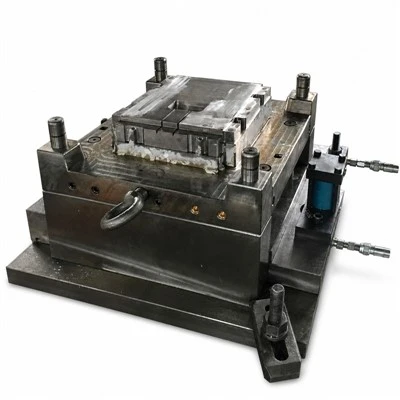
If you’re currently dealing with flash on your medical molding parts, or you’re sourcing a new mold for a critical component, we’re here to help. We can review your current mold design, run a consultation on your process parameters, or quote a custom mold built to meet your specific tolerance and regulatory requirements. Reach out to our team to discuss your project and find a solution that works for your production needs.
Ballistic Mold References
- International Organization for Standardization. ISO 13485:2016, Medical devices — Quality management systems — Requirements for regulatory purposes. ISO, 2016.
- U.S. Food and Drug Administration. 21 CFR Part 820 — Quality System Regulation. U.S. FDA, 1996.
- Rosato, D. V., and Rosato, D. V. Injection Molding Handbook, 4th Edition. Carl Hanser Verlag, 2000.
- Tooling Magazine. “Key Mold Design Factors to Prevent Flash in Medical Injection Molding.” 2022 Medical Manufacturing Special Issue.
Taizhou Lingyue Mold and Plastic Co., Ltd.
Taizhou Lingyue Mold and Plastic Co., Ltd. is one of the most professional injection medical mold manufacturers and suppliers in China, also supports customized service. If you’re going to buy advanced injection medical mold made in China, welcome to get quotation from our factory. Quality products and low price are available.
Address: NO.18, Shangxian Road, North Industrial Zone, Huangyan, Taizhou City, Zhejiang, China
E-mail: ly@lingyuemold.com
WebSite: https://www.lingyuemold.com/
