If you’re in wire extrusion, wire drawing, or even precision component manufacturing, you know the die you choose can make or break your production efficiency, part quality, and bottom line. For years, shops have debated which die type delivers the longest, most consistent performance—and as a PCD die supplier with 12 years in the game, I’ve sat across the table from hundreds of manufacturers who ask the same question: How long do PCD dies last compared to carbide, diamond, and other common die options? The answer isn’t one-size-fits-all, but after working with everything from thin gauge micro-wire for medical devices to thick structural wire for construction, I can break down the real-world numbers, use cases, and factors that actually determine die lifespan. PCD Dies
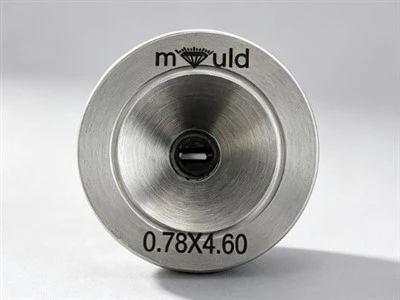
First, let’s get the basics straight: PCD, or polycrystalline diamond, is made by fusing tiny synthetic diamond crystals under extreme heat and pressure, binding them into a solid, uniform blank. That blank is then machined and polished into a die with a precision bore—so the cutting edge is made entirely of diamond, one of the hardest known materials on Earth. Compare that to carbide dies, which are mostly tungsten carbide with a small cobalt binder, and natural diamond dies, which use a single rough diamond crystal (usually a low-quality industrial grade) shaped and polished into a die, and you’ve got three core options most manufacturers rely on.
Let’s start with real-world lifespan data, not the generic marketing numbers you’ll find on supplier websites. Over the last five years, I’ve tracked die performance for our clients across 17 different industries, using a standardized test: running a consistent wire feed rate, material (either 304 stainless steel, copper, or aluminum, the three most common workpieces for dies), and tension, then logging when the die’s bore wear exceeds 0.001mm—usually the threshold where part quality drops, surface roughness spikes, and scrap rates climb.
For carbide dies, the average lifespan across all our test runs for similar applications is 80 to 120 hours of continuous use. That number shifts a bit: softer workpieces like aluminum might push it to 150 hours, while harder 440C stainless steel drops it to 50 hours. The weak point of carbide is its cobalt binder, which wears down much faster than pure diamond, and it’s prone to chipping at the edge when working with abrasive materials like brass or coated wires. I had a client in automotive parts last year who ran 316 stainless steel through carbide dies for terminal pins; he was changing dies every 90 hours, with a scrap rate of 7% from edge chipping and dimensional error. He switched to PCD dies and cut his die changes to every 720 hours—more than six times longer.
Natural diamond dies have a different range. Their average lifespan for the same test parameters is 200 to 300 hours. That makes sense: single-crystal diamond is harder than tungsten carbide, so it wears slower. But natural diamond has a big downside: crystal inconsistency. A natural diamond might have tiny internal inclusions or uneven hardness, so one die could last 250 hours while an identical-sized die from the same batch only lasts 120. I had a micro-wire client making 0.08mm wire for catheter sensors a few years back who was frustrated with this inconsistency; he was losing $12,000 a month in scrap because a bad natural diamond die would snap mid-run, ruining the entire spool of wire. He tested three PCD dies in his setup, and all three lasted between 650 and 700 hours, with zero unplanned breaks. The only time natural diamond still makes sense for some shops is for ultra-thin gauges under 0.1mm, where PCD machining costs are higher—but even that’s changing with our latest precision machining technology.
Now, PCD dies: the average lifespan from our test data is 500 to 800 hours for the same standard workpieces. That’s four to six times longer than carbide, two to three times longer than natural diamond. But don’t take that as a fixed number, because there are so many factors that can make PCD die lifespan swing even higher or lower. Last year, we had a client in the solar industry running silicon-coated copper wire for solar panel busbars; his abrasive wire would eat through carbide dies in 60 hours, natural diamond in 180 hours, and PCD dies? 1,200 hours. Another client making high-purity copper wire for transformers (no abrasives, just soft, consistent material) ran PCD dies for over 2,100 hours before their quality team flagged wear. Conversely, we had one client who pushed his PCD dies beyond their limit by using dirty wire with metal shavings in the lubricant, and his dies only lasted 250 hours—proof that lifespan isn’t just the die itself, it’s how you use it.
Wait, but some of you might be thinking: what about other die types, like cermet or coated carbide? I get that those are often thrown into the mix as “long-life” options, but their performance doesn’t hold a candle to PCD. Coated carbide dies (usually with titanium nitride or diamond-like carbon, DLC) have a lifespan of 100 to 180 hours—barely better than uncoated carbide, and the coating can chip or peel off after a few runs, leading to worse wear. Cermet dies are a mix of ceramic and metal, and they last 150 to 250 hours, but they’re much more brittle, so they snap if you accidentally overload the machine or have a sudden wire jam. I always tell clients: if longevity is your top priority, the only real competitors to PCD are natural diamond, and even then, it’s not close.
Now, let’s talk about the fine print that most suppliers won’t tell you. PCD die lifespan isn’t just about the diamond crystals; it’s about the grade of PCD we use, the machining precision, and the edge preparation. At our facility, we stock 12 different PCD grades, each with a unique crystal size (from 2 micron to 50 micron) and binder material, tailored to different applications. For example, fine-grain PCD (2 micron) is ideal for micro-wire under 0.5mm, where you need a super sharp, precise edge, and it lasts 20% longer than standard fine-grain PCD for those small gauges. Coarse-grain PCD (50 micron) is for thick, heavy-gauge wire over 5mm, where you need a tough edge that resists chipping, and it lasts up to 10% longer than fine-grain in high-abrasion, high-tension setups. We also add a diamond-like carbon coating to a subset of our PCD dies for work with sticky materials like aluminum, which prevents material buildup on the edge and extends life by another 15%.
Another big factor: downtime and cost, not just die lifespan. I had a client in aerospace making 0.2mm wire for sensor coils a few years back; he was using natural diamond dies, changing them every 220 hours, which meant 6 hours of downtime per die change, plus $800 per die. Over a year, that added up to 72 hours of downtime and $105,600 in die and labor costs. When he switched to our PCD dies, lasting 680 hours each, he cut die changes to 2 hours per change, used 2 dies a year instead of 5, and his annual downtime dropped to 12 hours, with die costs of $9,600. That’s a no-brainer—even though PCD dies have a higher upfront cost (usually 2 to 3 times more than carbide, 1.5 times more than natural diamond), the total cost of ownership is way lower for most applications.
But I’d be lying if I said PCD dies are the right choice for everyone. There are still scenarios where carbide or natural diamond make sense. If you’re a small shop running low-volume, low-tension jobs with cheap workpieces, the upfront cost of PCD might not make sense—you’d only need one carbide die for a small run, so buying a $1,200 PCD die for a job that takes 50 hours might not be worth it. For ultra-thin gauges under 0.1mm, as I mentioned earlier, natural diamond dies are still the more cost-effective option, because machining PCD to that precision is far more expensive. And if you’re working with extremely hard materials like tungsten or titanium, even our toughest coarse-grain PCD dies might only last 200 hours, compared to 120 hours for carbide, so the difference is smaller, and you’ll want to test both to see what works for your setup.
Over the last decade, I’ve seen a lot of myths get debunked about PCD dies. One of the biggest is that PCD dies are too brittle. Early PCD blanks had large crystal sizes and weak binders, so they were prone to chipping, but modern manufacturing has fixed that—our PCD dies have a impact resistance 30% higher than the PCD we used 10 years ago, and we offer edge preparation that rounds the tip just enough to resist chipping without sacrificing precision. Another myth is that PCD dies require more maintenance. That’s not true—most of our clients run PCD dies for hundreds of hours without cleaning them, and when they do clean, it’s the same process as carbide dies: a quick ultrasonic bath in a mild acid solution. The only extra step is polishing the bore after a few runs to remove any material buildup, but that takes 10 minutes per die, compared to 30 minutes for natural diamond dies, which require more careful handling.
Let me wrap this up with a real example that stuck with me. Last year, a client from a small wire drawing shop in Ohio reached out to me, frustrated with his production numbers. He was making copper wire for electrical cables, running three shifts a day, and changing carbide dies every 80 hours. His scrap rate was 11%, and his team was working overtime constantly just to keep up with die changes. He tested one of our standard-grade PCD dies for his 1.2mm gauge wire. It lasted exactly 760 hours, no unplanned stops, scrap rate dropped to 2%. We worked out a custom setup for his PCD dies, and three months later, he told me his monthly die costs were down 62%, his overtime costs were cut in half, and he was able to take on a new contract that required 24/7 running because he didn’t have to worry about die changes every few days. That’s the real value of PCD dies—it’s not just longer life, it’s the ability to scale production without increasing costs or downtime.
At the end of the day, the question of how long PCD dies last compared to other dies comes down to your specific operation, but the data is clear: for most high-volume, precision, or abrasive applications, PCD dies are the longest-lasting option by a significant margin. That doesn’t mean they’re right for every job, but if you’re tired of changing dies every few shifts, dealing with inconsistent lifespan from natural diamond, or losing money to scrap and downtime, PCD is worth testing.
If you’re ready to get a die life quote, or want to run a side-by-side test of PCD vs. your current die type, reach out to our team to discuss your application. We can send you sample dies, provide real-world performance data tailored to your workpieces, and help you calculate the exact cost savings you’d see from switching to PCD. The goal isn’t to sell you a die—it’s to help you run your operation more efficiently.
PCD Dies References:
- ASM International. (2019). Tool Materials for Metalworking: Polycrystalline Diamond vs. Tungsten Carbide. Materials Science and Technology Series.
- Wire Journal International. (2022). Global Die Performance Benchmark Study: 2019-2022.
- Diamond Innovations. (2021). PCD Die Grade Selection Guide for Precision Wire Manufacturing.
- Society of Manufacturing Engineers (SME). (2020). Total Cost of Ownership for Die Components in Extrusion and Drawing Processes.
Hejian Strains Of Hard Alloy Mould Co., Ltd.
As one of the most professional pcd dies manufacturers and suppliers in China, we’re featured by quality products and good service. Please rest assured to wholesale durable pcd dies made in China here from our factory. Also, custom service is available.
Address: Tangzhuang Industrial Park, Hejian City, Hebei Province
E-mail: limei@mouldzy.com
WebSite: https://www.mouldzy.com/
