If you’re running a screen printing operation, you already know that the pallet is far more than just a flat board to hold your garments in place. It’s the foundation of every print, the surface that determines alignment, stability, and even the quality of the ink transfer. I’ve spent 12 years building pallets for screen printing presses, and I can’t tell you how often new shop owners come to me frustrated because their old pallets warped mid-run, left ghost images on their prints, or wore down so fast they had to replace them every few months. The root of almost all those problems? They picked the wrong plywood. Pallet for Screen Printing Press
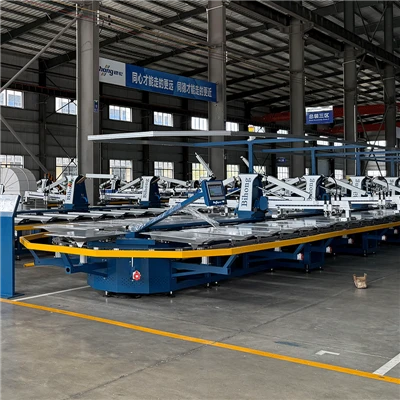
I get it—when you’re first setting up, it’s tempting to grab the cheapest plywood from the local hardware store. But here’s the hard truth: not all plywood is created equal, and what works for framing a house won’t survive the heat, moisture, and constant pressure of screen printing. Let’s break down exactly what type of plywood you need for a screen printing pallet, why it matters, and the common mistakes I see people make every single day.
First, let’s talk about the core requirements a plywood needs to be a good pallet. It has to be rigid enough to hold its shape during long print runs—no warping after a few weeks of heating under a flash dryer. It needs a smooth, uniform surface that won’t snag on fabric when you’re sliding a shirt onto the pallet. It has to resist moisture, too; ink cleanup and humidity in your shop can cause cheap plywood to swell, which throws alignment off. And it needs to be stable enough to hold perfectly still when your screen is pressed down, so you don’t get blurry prints or misaligned designs.
The go-to plywood for almost every professional pallet I build is Baltic Birch Plywood. Let me explain why. Baltic Birch is made from multiple thin layers of birch veneer, stacked and bonded with a waterproof adhesive. Unlike cheaper plywood that uses softwood, pine, or even particleboard as core layers, Baltic Birch’s entire composition is hardwood veneer. That makes it incredibly dense, rigid, and resistant to warping. I’ve had pallets I built 10 years ago that still hold their shape as perfectly as the day I installed them, even through 10-hour daily runs and regular exposure to isopropyl alcohol and water from cleanup.
Wait, not all Baltic Birch is the same, though. You want the B/BB grade, not the lower grades. Let me clarify that grading: the “B” refers to the front face, which has minimal knots and a smooth, sanded surface—perfect for printing. The “BB” is the back, which can have a few small knots, but that doesn’t matter for pallets because only the front is printed on. Lower grades, like C/D, have large knots, voids, and inconsistent thickness. Those voids and gaps mean the pallet won’t lay flat, and the knots can cause ink to bleed or leave uneven spots. I tried using C/D grade once early in my career, and within a month, a knot swelled and created a bump that ruined 50 hoodies. That was a costly lesson, and I never looked back.
Another big no-no: MDF or particleboard. You might be tempted to pick those because they’re cheap and smooth, but they’re a disaster for pallets. MDF (Medium-Density Fiberboard) is made from wood fibers glued together, and it absorbs moisture like a sponge. Even a small spill of water or ink will make it swell, warp, and crumble over time. Particleboard is even worse—it’s held together with weaker adhesive and will start to flake apart after a few uses. I’ve seen shops switch to MDF thinking they’d save money, only to replace pallets every 2-3 months, which ends up costing more in the long run than investing in the right plywood from the start.
What about exterior plywood? Some people think, “it’s waterproof, so that’s perfect!” But exterior plywood is designed for outdoor use, and it has a rougher surface, usually with more knots and a coarser sanding. It’s also made with a different adhesive that can release fumes when heated, which isn’t ideal for screen printing, especially if you’re using plastisol inks that require high heat. I’ve tried exterior plywood a handful of times, and the ink would never dry as evenly, or the surface would snag on cotton fabric. It’s not worth the extra “waterproof” rating you’ll never actually need in a well-ventilated screen printing shop.
Now, let’s talk about thickness. Most pallets are between ½ inch and ¾ inch thick. For smaller pallets (like for t-shirts or baby onesies), ½ inch works fine—it’s light enough to slide on and off the press, but still rigid. For larger pallets (like for hoodies, jackets, or multiple small shirts), I always recommend ¾ inch. The extra thickness adds more stability, so you don’t get any flex when you press the screen down over a heavy hoodie. Flex leads to inconsistent pressure, which means some parts of the print will be too thin and others too thick. That’s a common issue with cheap, thin pallets, and it’s avoidable with the right thickness.
Another factor: veneer core vs. softwood core plywood. Some Baltic Birch imitations use a softwood core (pine, spruce) to cut costs. Those are not the same as solid birch veneer plywood. The softwood core is less dense, so the pallet will flex more, and the layers are more likely to separate over time. When you’re shopping for Baltic Birch, look for a label that says “all veneer core” or “solid birch plywood” — that’s the one you want. If the label mentions a softwood core, skip it.
I also want to address the myth that birch is too expensive. Let’s do the math: a sheet of ¾ inch B/BB Baltic Birch is around $60, compared to $20 for a sheet of pine plywood. But that pine plywood pallet will need to be replaced every 3-6 months, while a Baltic Birch pallet can last 5-10 years. Over time, the cost is almost identical, and you’re getting a better product that won’t ruin your inventory. I’ve had customers come to me after wasting thousands on cheap pallets, and they tell me switching to Baltic Birch cut their pallet costs by 80% annually. That’s a number that sticks with you.
Now, what about pallets for specialty printing? If you’re printing on stretchy fabrics like athletic wear, or fabrics with a lot of texture (like terry cloth), Baltic Birch still works, but you might want to add a layer of phenolic resin. Phenolic is a hard, plastic-like coating that’s bonded to the top of the plywood, making it even more resistant to ink, snags, and heat. It’s a great upgrade for shops that do a lot of high-volume runs or print on tricky fabrics, but it’s not necessary for basic t-shirt printing. Baltic Birch alone is enough for most operations.
I’ve also had customers ask me about using plywood that’s already been used for other projects. Don’t do that. Even if it looks smooth on the surface, old plywood might have hidden warps, or the adhesive might have weakened from previous use. You need a fresh, perfectly flat sheet to cut your pallets, otherwise you’ll run into alignment issues right out of the gate.
Let me wrap this up with a few quick tips I’ve learned over the years. First, always buy your Baltic Birch from a supplier that specializes in screen printing materials, not a general hardware store. Hardware stores often sell lower grade Baltic Birch or imitations, while a screen printing supply supplier will have the exact B/BB grade you need, cut to size if you want. Second, when you cut your pallets, make sure to seal the edges with a clear polyurethane or epoxy. The edges of plywood are the most porous, and if they absorb moisture, the layers can separate. Sealing the edges adds extra longevity to your pallet. Third, avoid any plywood with voids—hold up a sheet and look for small gaps between the veneer layers. Voids might seem small, but they’ll cause the pallet to flex and lead to uneven prints.
At the end of the day, the right plywood isn’t just a material—it’s an investment in the quality of your prints. A bad pallet can turn a perfect screen and a great ink into a ruined batch of shirts, which costs you time and money. I’ve been building pallets for screen printing presses for over a decade, and I’ve seen every mistake in the book. The ones who stick with Baltic Birch B/BB grade are the ones who have consistent runs, fewer reworks, and happier customers.
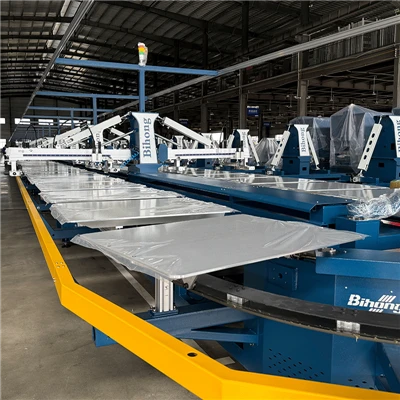
If you’re tired of pallets that warp, snag, or wear out too fast, and you want pallets that will hold up to the demands of your press run after run, let’s connect. We can walk through your specific needs, whether you’re setting up a new shop or upgrading your current pallet lineup, and find the right plywood and build for your operation. Don’t let bad plywood hold your screen printing back—let’s get you pallets that work as hard as you do.
Mesh for Screen Printing Press References:
- Screen Printing Magazine. (2021). Pallet Construction Basics for Consistent Prints.
- Forest Products Laboratory, U.S. Department of Agriculture. (2019). Performance Characteristics of Industrial Plywood for Manufacturing Applications.
- International Screen Printing Association. (2022). Material Selection for Screen Printing Pallets: A Guide for Shop Owners.
- Wood Technology Journal. (2020). Hardwood Veneer Core Plywood for High-Strain Industrial Applications.
Guangdong Aces Machinery Co., Ltd.
Guangdong Aces Machinery Co., Ltd. is one of the most professional pallet for screen printing press manufacturers and suppliers in China. We are committed to providing high quality equipment made in China with low price. If you’re going to buy durable pallet for screen printing press, welcome to get pricelist from our factory. Customized orders are welcome.
Address: 701, Building 5, Liandong U Valley, No.8 Zhixin 1st Road, Dagang Town, Nansha District, Guangzhou City, Guangdong Province, China.
E-mail: jessie@bhprinter.com
WebSite: https://www.bihongprinter.com/
