Hey everyone, it’s Jake from the Audi brake disc supply team—you know, the guys you hit up when you need reliable, OE-grade discs for your A4, Q5, or whatever Audi you’re wrenching on (or driving daily). Today I’m tackling a question I get at least twice a week in our DMs: “Can I run ceramic brake pads with Audi Series brake discs?” AUDI Series Brake Discs

First off, let’s cut the fluff here—this isn’t some fancy, only-read-in-manuals technical thing. If you’re rolling with our Audi discs, ceramic pads work 9 times out of 10… but there’s a bunch of small, specific stuff you need to know to not mess up your brakes, your Audi’s warranty (if you still have it), or even your morning commute’s noise level. Let’s break this down like we’re chatting over coffee, not doing a corporate product demo.
Let’s Start With The Basics: What Even Are Audi Series Brake Discs, And Why Does That Matter?
Wait, hold on—before I get into ceramic pads, let’s quick clarify what “Audi Series brake discs” means for us, because not every “Audi disc” is the same. We don’t just slap a Audi logo on a random disc from a overseas factory and call it a day. Our line is OE-matched—meaning we engineer every single disc (for A1 through R8, S models and even performance RS trims) to fit exactly where it should, hold the same thermal specs as the factory ones, and pair with Audi’s stock calipers.
The key specs here that tie into ceramic pads? First, our discs have a precise surface finish. Not too smooth, not too gritty—something we call “micro-texturing” that’s specifically calibrated for Audi’s caliper clamping force and how the car’s ABS/traction control is tuned. We don’t make soft, porous discs that’ll warp if you push ‘em hard, and we don’t make rock-hard ones that eat pads for breakfast. We split our Audi discs into two main lines, too: standard daily driver discs for A4, Q5, and A6 owners, and high-performance, vented/drilled discs for S and RS models that track or hard-run their Audis. That split matters a lot for ceramic pads, trust me.
So, Can You Actually Pair Ceramic Pads With Our Audi Discs?
Short answer: Yes, but with caveats. Let’s get into when it works, when it doesn’t, and what you have to watch out for.
First, let’s talk about what ceramic pads do that makes people love ‘em. They’re quieter than semi-metallic pads, they dust way less (no more cleaning your Audi’s alloy wheels every 3 days), and they don’t brake as harshly at low speeds—perfect for daily commutes, running kids to school, or zipping around city streets where you stop and go. A lot of Audi owners swap to ceramic pads specifically to cut down on that annoying brake squeal that creeps in after 20k miles, and that’s totally doable with our discs—if you pick the right ceramic pads.
Wait, I said “right ceramic pads” for a reason. Not all ceramic pads are created equal either. There’s budget ceramic pads (super cheap, made with filler materials to cut costs) and premium OE-matched ceramic pads. If you grab the no-name ceramic pads from Amazon that cost half as much as they should, that’s where you’ll run into issues. Those cheap pads often have inconsistent friction material, which can react weirdly with our Audi disc’s surface finish. Our discs are engineered to work with specific friction coefficients, and budget ceramic might be too high or too low, leading to that spongy brake feel you don’t want.
Now, when does pairing ceramic pads with our Audi discs not work? Let’s get real—if you’re a track day warrior, or you drive your RS3 hard on back roads every weekend, ceramic pads probably aren’t your move. Why? Because ceramic pads work best at temperatures between 200°F and 600°F. If you’re hauling down a mountain pass or doing laps, your brakes will hit 800°F+ fast, and ceramic pads lose a ton of friction at high temps. Our Audi performance discs are built to handle that heat, but ceramic pads will start to glaze over (that’s when the pad material melts and forms a shiny film on the disc) and become almost useless. At that point, you’re way better off with semi-metallic pads paired with our performance Audi discs.
Also, here’s a big one for new Audi owners: if your Audi is still under factory warranty, mixing ceramic pads with our Audi discs is fine—as long as the pads are street-legal, no aftermarket nonsense. A lot of people panic thinking any brake swap voids warranty, but that’s only if you use parts that don’t meet Audi’s specs. Our discs are OE-matched, and street-legal ceramic pads that fit Audi’s calipers are totally warranty-friendly. The only caveat here: if you’re swapping your own pads and mess up the bedding-in process (which I’ll cover in a sec), that could cause issues, but that’s on the installation, not the parts.
The Big Mistakes People Make When Pairing Ceramic Pads With Audi Discs
I’ve seen this so many times, I could write a whole blog post about it. Let’s go over the most common missteps that lead to people saying “ceramic pads suck with Audi discs” when really, they just messed up.
First and foremost: skipping the bedding-in process. This is non-negotiable, no matter what pads you run, but it’s extra important with ceramic and our Audi discs. Bedding in is when you heat the pads and disc evenly to transfer a thin layer of pad material to the disc’s surface—this is what gives you consistent braking feel and prevents squeal or uneven wear. If you skip this, you’ll get brake fade, squealing, and uneven pad/disc wear that can mess up our Audi disc’s surface finish.
How to do it right? It’s simple, just don’t do it on your first drive home from the parts store. Here’s the quick method: Find a empty, safe stretch of road (no traffic, no pedestrians). Drive at 40 mph, then brake firmly but not hard until you hit 10 mph—don’t come to a full stop, keep the brake engaged just enough to slow down without locking up. Do that 5 times in a row, then let the brakes cool for 10 full minutes. Don’t slam on them, don’t sit at a red light with your foot on the brake, just let ‘em chill. Then do 2 more of those 40-10 stops, cool again. That’s it. If you do this, you’ll avoid 70% of the brake issues people complain about with ceramic pads.
Another mistake: Using ceramic pads that are too thin, or not the right size for our Audi discs. Wait, I get it—you see a cheap set of ceramic pads for your A4, so you grab ‘em. But Audi’s discs have specific pad sizes, especially for the S and RS models, which have bigger calipers and thicker discs. A pad that’s too thin will wear out in 10k miles, and if it’s the wrong shape, it’ll sit wrong in the caliper, leading to uneven pad wear and weird brake feel. We always recommend pairing our Audi discs with pads that are listed as “Audi-specific” for your exact model year and trim—we can even help you pick these if you’re not sure, just shoot us a message.
Third mistake: Not cleaning the disc surface before installing new pads. I know, it’s a tiny step, but so many people skip it. When you get our Audi discs, they’re coated with a light rust inhibitor to keep ‘em from rusting in the warehouse or shipping. If you don’t wipe that off with isopropyl alcohol before putting the new pads on, that inhibitor will get between the pad and disc, causing squeal and inconsistent braking. It takes 2 minutes, I promise.
Can Ceramic Pads Damage Our Audi Discs?
Let’s address the scary question everyone asks: Do ceramic pads scratch or ruin our Audi discs? The short answer is no—if you do it right. Our Audi discs have a hard, durable cast iron surface (or carbon-ceramic for the high-end RS models, but that’s a whole different beast) that’s designed to handle different pad materials. The micro-texture on our discs is meant to grab pad material, so ceramic pads will actually bed in nicely if done right.
The only way ceramic pads damage our discs is if you use super cheap, low-quality pads that have hard filler materials (like glass or metal shavings that aren’t bonded properly). Those fillers can scrape the disc’s surface and cause uneven wear, which might lead to warping over time. But again—this is on the pad, not the combination. If you pick a reputable ceramic pad brand, you’re good.
Wait, what about carbon-ceramic Audi discs? Oh right, we carry carbon-ceramic discs for the top RS models, and guess what? You can run ceramic pads with those too—actually, a lot of RS track owners do that for street use, since carbon-ceramic is so durable that even ceramic pads won’t wear it down. The only difference there is the bedding-in process is a bit longer, but that’s it.
Quick Pro Tips For Pairing Ceramic Pads With Our Audi Discs
I’ve worked with Audi brakes for over 8 years, so these little hacks have saved so many people from headaches, so I’m passing them along:
- Pair for your use case: If it’s a daily driver (A3, A4, Q5), go with premium street ceramic pads. If it’s an S5 or RS5 you track 2x a month, stick to semi-metallic—ceramic can’t handle the heat.
- Stick to Audi-specific pads: We always have pad recommendations on our product pages, and if you message us, we’ll send the exact fit for your model. No random Amazon pads.
- Check your brake fluid: Wait, does that matter here? Yep! Ceramic pads work best with fresh brake fluid—old, water-contaminated fluid will make your brakes feel spongy, regardless of pads or discs. So if you’re swapping pads and discs, flush the fluid too. It’s cheap and easy, and makes a huge difference.
- Don’t mix pad types: Never run one semi-metallic and one ceramic pad on the same axle. That leads to uneven braking, and can mess with your Audi’s ABS system. We see this all the time—someone swaps the front pads to ceramic and leaves the rear stock semi-metallic, and they complain about a pull to one side. Don’t do that.
Wrapping This Up (And How To Work With Us)
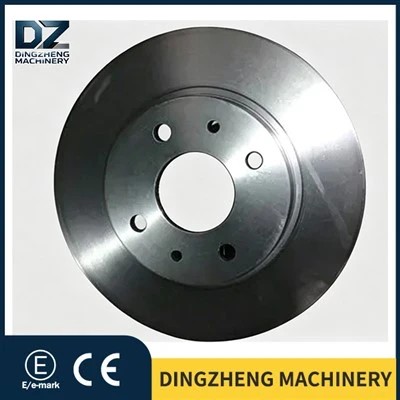
At the end of the day, pairing ceramic pads with our Audi Series brake discs is totally safe and smart for 90% of Audi owners. It cuts down on dust, reduces squeal, and gives that smooth, low-effort brake feel that’s perfect for daily driving. The only time it’s not the right call is if you’re pushing your Audi hard on tracks or mountain roads, where semi-metallic pads paired with our performance Audi discs will be more reliable.
Automotive Brake Disc And hey—if you’re in the market for new Audi brake discs, or you’re not sure what pads will work best with your existing set, hit us up. We supply OE-grade, tested-and-approved Audi discs for every model and trim, so you don’t have to guess if something will fit or work. No weird foreign knockoffs, no hidden fine print—just reliable brakes that work with whatever pad setup you want, as long as it’s the right fit.
References
- Automotive Brake Friction and Material Compatibility. SAE International, 2021.
- Audi Official Brake System Specifications for OE Replacement Components. Volkswagen Group of America, 2022.
- Brake Bedding-In Protocols for Light Duty Passenger Vehicles. National Highway Traffic Safety Administration (NHTSA), 2020.
Laizhou Dingzheng Machinery Co., Ltd.
As one of the most professional audi series brake discs manufacturers and suppliers in China, we’re featured by quality products and good price. Please rest assured to buy cheap audi series brake discs for sale here from our factory. We also accept customized orders.
Address: Luan Jia village, Tushan town, Laizhou city, Shangdong
E-mail: AMY@cndingzheng.com
WebSite: https://www.dingzhengbrake.com/
