As a provider of heat treatment kilns, I often encounter customers who are interested in understanding the temperature control range adjustment methods in these kilns. Temperature control is a critical aspect of heat treatment processes, as it directly affects the quality and properties of the treated materials. In this blog post, I will share some insights into the temperature control range adjustment methods in a heat treatment kiln. Heat Treatment Kiln

Understanding the Basics of Temperature Control in Heat Treatment Kilns
Before delving into the adjustment methods, it’s important to understand the basic principles of temperature control in heat treatment kilns. Heat treatment kilns are designed to heat materials to specific temperatures and maintain them within a certain range for a specified period. This process can involve various stages, such as heating, soaking, and cooling, each of which requires precise temperature control.
The temperature control system in a heat treatment kiln typically consists of a temperature sensor, a controller, and a heating element. The temperature sensor measures the actual temperature inside the kiln and sends this information to the controller. The controller then compares the actual temperature with the setpoint temperature and adjusts the power supplied to the heating element accordingly to maintain the desired temperature.
Factors Affecting Temperature Control Range
Several factors can affect the temperature control range in a heat treatment kiln. These include:
- Heating Element Capacity: The capacity of the heating element determines the maximum temperature that the kiln can reach. A larger heating element can provide more heat and allow for a higher temperature range.
- Insulation Quality: Good insulation helps to reduce heat loss from the kiln, which is essential for maintaining a stable temperature. Poor insulation can lead to temperature fluctuations and make it difficult to control the temperature within a narrow range.
- Kiln Size and Geometry: The size and geometry of the kiln can also affect the temperature distribution inside. Larger kilns may require more powerful heating elements and more sophisticated control systems to ensure uniform temperature distribution.
- Material Properties: The properties of the materials being treated, such as their thermal conductivity and specific heat, can influence the temperature control requirements. Some materials may require a slower heating rate or a more precise temperature control to achieve the desired results.
Temperature Control Range Adjustment Methods
Manual Adjustment
One of the simplest methods of adjusting the temperature control range is through manual adjustment. This involves manually setting the temperature setpoint on the controller and monitoring the actual temperature inside the kiln. If the actual temperature deviates from the setpoint, the operator can adjust the power supplied to the heating element by turning a knob or using a switch.
Manual adjustment is suitable for small-scale heat treatment processes or when a high degree of flexibility is required. However, it can be time-consuming and requires constant monitoring by the operator. Additionally, manual adjustment may not be as precise as automated methods, especially when dealing with large temperature variations or complex heat treatment cycles.
Programmable Logic Controller (PLC)
A Programmable Logic Controller (PLC) is a more advanced temperature control method that allows for automated adjustment of the temperature control range. A PLC is a digital computer that can be programmed to control various functions of the heat treatment kiln, including temperature control.
With a PLC, the operator can program a specific temperature profile for the heat treatment process, including the heating rate, soaking time, and cooling rate. The PLC then automatically adjusts the power supplied to the heating element based on the programmed profile, ensuring that the temperature inside the kiln follows the desired pattern.
PLCs offer several advantages over manual adjustment. They provide more precise temperature control, reduce the need for constant operator monitoring, and allow for easy modification of the temperature profile. Additionally, PLCs can be integrated with other control systems, such as sensors and actuators, to provide a more comprehensive control solution.
PID Control
Proportional-Integral-Derivative (PID) control is another commonly used method for adjusting the temperature control range in heat treatment kilns. PID control is a feedback control algorithm that uses the error between the actual temperature and the setpoint temperature to calculate the appropriate control action.
The PID controller continuously measures the actual temperature inside the kiln and compares it with the setpoint temperature. Based on the difference between the two, the controller calculates a control signal that is used to adjust the power supplied to the heating element. The control signal is a combination of three components: proportional, integral, and derivative.
The proportional component provides a direct response to the error, the integral component accumulates the error over time to eliminate any steady-state error, and the derivative component predicts the future behavior of the error to provide a more responsive control action.
PID control offers several advantages over other control methods. It provides fast and accurate temperature control, can adapt to changes in the process conditions, and is relatively easy to implement. However, PID control requires careful tuning of the controller parameters to achieve optimal performance.
Importance of Accurate Temperature Control
Accurate temperature control is essential for ensuring the quality and consistency of the heat treatment process. Incorrect temperature control can lead to a variety of problems, such as:
- Material Defects: Overheating or underheating the materials can cause them to develop cracks, warping, or other defects, which can affect their mechanical properties and performance.
- Inconsistent Results: Temperature fluctuations can lead to inconsistent results, making it difficult to reproduce the same quality of heat treatment from one batch to another.
- Energy Waste: Inefficient temperature control can result in excessive energy consumption, increasing the operating costs of the heat treatment process.
By using the appropriate temperature control range adjustment methods, we can ensure that the heat treatment kiln operates at the optimal temperature, providing consistent and high-quality results while minimizing energy consumption.
Conclusion
In conclusion, the temperature control range adjustment methods in a heat treatment kiln play a crucial role in ensuring the quality and efficiency of the heat treatment process. Manual adjustment, PLC control, and PID control are all effective methods for adjusting the temperature control range, each with its own advantages and disadvantages.
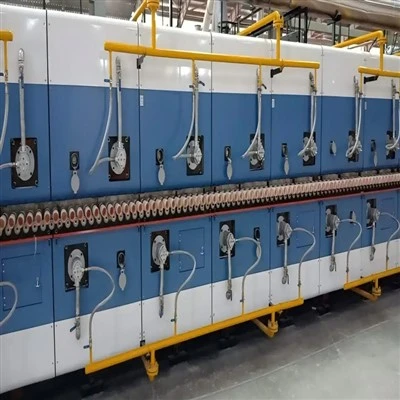
As a heat treatment kiln provider, we understand the importance of accurate temperature control and offer a range of kilns equipped with advanced temperature control systems. Our kilns are designed to meet the specific requirements of different heat treatment processes, providing precise temperature control and reliable performance.
Tunnel Kiln If you are interested in learning more about our heat treatment kilns or need assistance with temperature control range adjustment, please feel free to contact us. We would be happy to discuss your needs and provide you with a customized solution.
References
- ASM Handbook Volume 4: Heat Treating. ASM International.
- Heat Treatment Principles and Techniques. John C. Lamond and David A. Crewe.
- Industrial Heat Treating Technology and Equipment. C. B. Almond.
Henan Yaxin Kiln Co., Ltd.
Henan Yaxin Kiln Co., Ltd. is one of the most professional heat treatment kiln manufacturers and suppliers in China. With abundant experience, we warmly welcome you to buy high quality heat treatment kiln with the latest design from our factory. Good service and punctual delivery are available.
Address: Jixian Industrial Zone, Shangqiu City, Henan Province
E-mail: 1543563178@qq.com
WebSite: https://www.hnyxkiln.com/
