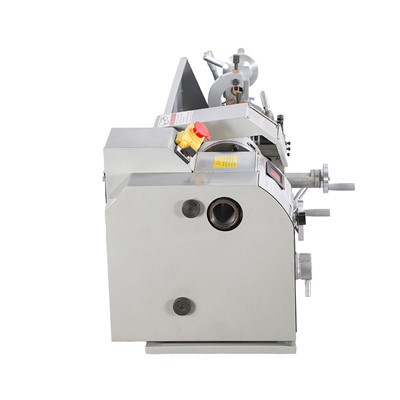
Yo, folks! I’m a supplier of benchtop metal lathes, and let me tell ya, managing the heat in these bad boys is no joke. It’s something that can really mess with the performance and lifespan of your lathe if you don’t handle it right. So, I’m gonna share some tips on how to manage the heat in a benchtop metal lathe based on my experience in the business. Benchtop Metal Lathe
Understanding Why Heat is a Big Deal
First off, you gotta understand why heat is such a problem in the first place. When you’re using a benchtop metal lathe, the cutting tool rubs against the metal workpiece. This friction generates a whole lot of heat. And too much heat can cause a bunch of issues.
For starters, it can damage the cutting tool. The high temperatures can make the tool lose its hardness and sharpness, which means you’ll have to replace it more often. That’s not only a pain but also costs you money.
Secondly, heat can affect the quality of the workpiece. It can cause the metal to warp or change its properties, which is a huge no – no if you’re trying to make precise parts.
Choosing the Right Cutting Tools
One of the first steps in heat management is choosing the right cutting tools. You want tools that are made from materials that can handle high temperatures. Carbide cutting tools are a great option. They’re super-hard and can withstand a lot of heat without losing their edge.
When you’re selecting the cutting tool, also pay attention to its geometry. Tools with the right rake angle, clearance angle, and cutting edge radius can reduce the amount of friction and, therefore, the heat generated during the cutting process. For example, a positive rake angle can make the cutting process smoother and less heat – intensive.
Using Coolants and Lubricants
Another crucial thing is using coolants and lubricants. These are like the life – savers for your benchtop metal lathe. Coolants help to reduce the heat by carrying it away from the cutting zone. There are different types of coolants available, such as water – based coolants and oil – based coolants.
Water – based coolants are great for general machining because they’re cost – effective and have good cooling properties. They also tend to be less messy than oil – based ones. However, oil – based coolants offer better lubrication, which can further reduce friction and heat.
You can use a coolant pump to spray the coolant directly onto the cutting area. Make sure the coolant is flowing at a consistent rate to keep the temperature down. And don’t forget to change the coolant regularly. Over time, it can get contaminated with metal chips and debris, which can reduce its effectiveness.
Lubricants work in a similar way. They create a thin film between the cutting tool and the workpiece, reducing friction. You can use aerosol lubricants or apply liquid lubricants with a brush. Just like with coolants, consistent application is key.
Controlling the Cutting Speed and Feed Rate
The cutting speed and feed rate are two variables that have a big impact on heat generation. If you run the lathe too fast, you’re gonna generate a ton of heat. The cutting tool will be rubbing against the metal at a high speed, causing a lot of friction.
On the other hand, if the feed rate is too high, the cutting tool has to remove more material at once, which also increases heat. You need to find the right balance between the cutting speed and the feed rate.
A general rule of thumb is to start with a lower cutting speed and feed rate and gradually increase them while monitoring the temperature. You can use a thermometer or an infrared temperature gun to check the temperature of the cutting tool and the workpiece. If you notice the temperature rising too quickly, slow down the cutting speed or reduce the feed rate.
Proper Maintenance of the Lathe
Proper maintenance of your benchtop metal lathe is essential for heat management. Make sure the lathe is clean and free of debris. Metal chips can build up around the cutting area, which can insulate the heat and make it worse.
Regularly check the bearings and the spindle of the lathe. Worn – out bearings or a misaligned spindle can cause the lathe to run inefficiently, generating more heat. Lubricate the moving parts according to the manufacturer’s instructions. This will reduce friction and keep the lathe running smoothly.
Also, inspect the electrical components of the lathe. Overheating can sometimes be caused by electrical problems, such as a faulty motor or wiring. If you notice any strange noises or smells coming from the lathe, it’s a good idea to have it checked out by a professional.
Ventilation and Air Circulation
Don’t overlook the importance of ventilation and air circulation. A well – ventilated area can help to dissipate the heat generated by the lathe. You can use fans to blow air across the lathe and the workpiece. This will help to carry the heat away and keep the temperature in check.
If possible, set up your lathe in an area with good natural ventilation. Open windows or doors to let fresh air in and hot air out. This can make a big difference in how well the lathe performs and how long it lasts.
Monitoring the Temperature
Last but not least, you need to monitor the temperature regularly. You can use simple tools like thermometers or more advanced infrared temperature guns. By keeping an eye on the temperature, you can detect any issues early on and take corrective action before it’s too late.
For example, if you notice that the temperature of the cutting tool is rising steadily, you can adjust the cutting speed, feed rate, or coolant flow. This proactive approach can save you a lot of headaches and money in the long run.
Wrapping Up and Reaching Out
So, there you have it, folks. Managing the heat in a benchtop metal lathe is all about choosing the right tools, using coolants and lubricants, controlling the cutting speed and feed rate, proper maintenance, ensuring good ventilation, and monitoring the temperature.

If you’re in the market for a benchtop metal lathe, or if you have any questions about heat management or lathe maintenance, don’t hesitate to reach out. I’m here to help you get the most out of your lathe and keep it running smoothly for years to come.
Benchtop Wood Lathe Let’s have a chat and see how we can work together to meet your machining needs. Whether you’re a hobbyist or a professional, I’ve got the right lathe and advice for you.
References
- "Machining Fundamentals" by various authors in the machining industry.
- Manufacturer’s manuals for benchtop metal lathes.
- Industry reports on cutting tool materials and their performance in high – heat environments.
YS Machine Tools Co., Ltd.
We’re well-known as one of the leading benchtop metal lathe suppliers in China, featured by quality products and good service. Please rest assured to buy customized benchtop metal lathe at competitive price from our factory. Contact us for more details.
Address: 300 Sandusky st, Ohio, 43611, USA
E-mail: yishoumachinetools@gmail.com
WebSite: https://www.ysmachinetool.com/
