Hey there, if you’ve ever dug into the printing game for things like metal tubes, plastic cartridges, or even those sleek aluminum candle containers, you’ve probably run into the term “cylinder printing machine” thrown around. As someone who’s been supplying these bad boys for the better part of a decade, I’ve heard way too many people mix them up with regular flatbed printers, screen presses, and even digital inkjets. Let me break this down straight—no jargon overload, just the real differences that make cylinder printing machines the unsung heroes for round, cylindrical products. Cylinder Printing Machine

First off, let’s cut to the chase: most printing machines are built for flat stuff. Flatbed printers, for example, are what you use for posters, business cards, or vinyl decals that stick to a flat surface. They lay ink down evenly across a stationary flat bed, and that works fine if your project doesn’t curve. But if you’ve ever picked up a deodorant stick, a battery, a travel mug, or a pipe—all cylindrical, right? A flatbed printer can’t wrap ink around that curve without smudging, distorting the design, or leaving half the surface blank. That’s where cylinder printing machines step in, because they’re designed for rotating, curved surfaces, not static flats.
Wait, but what about screen printing? I get it—screen presses are used for a lot of custom items, but they’re super different from cylinder models. Let’s think: a regular screen printer uses a stencil (a screen) that’s pressed onto whatever you’re printing on. If you use a screen press for a cylinder, you have to either roll the cylinder by hand, align the screen perfectly every time, and cross your fingers the design doesn’t line up off. That’s fine for small, one-off batches, but if you’re talking 10,000 aluminum tubes for a skincare brand or 50,000 plastic bottles for a soda company? Manual alignment kills time and costs you money. Cylinder printing machines automate that rotation—they lock the cylindrical piece in place, spin it at a consistent speed, and guide the print head smoothly along the length so every inch gets even, sharp ink. No hand alignment, no missed spots, no wasted product. That’s a game-changer for bulk runs.
Then there’s digital inkjet printing, which everyone’s raving about these days as the “new easy” option. Don’t get me wrong—digital works for some things, but it’s not the same for cylinder printing, and here’s why. Digital inkjets spray tiny drops of ink directly onto a surface, which is great for photos and complex designs on flats, but for curved cylinders? The spray nozzles are fixed, so as the cylinder spins, the distance between the nozzle and the surface changes a tiny bit, leading to inconsistent ink coverage. Also, digital inks often don’t adhere well to curved materials like metal or thick plastic—they smudge when you run the cylinder through a dishwasher or a packaging line. Cylinder printing machines, on the other hand, use specialized inks (UV-cured, solvent-based, or water-based, depending on the material) that are formulated to stick to round surfaces, and the printing process is calibrated so the ink sits flat on the curve, no feathering or blurriness even after the cylinder is bent or heated later.
Let me get specific about how these machines actually work, because that’s where the differences are obvious. A standard flatbed printer has a moving print head that goes back and forth over a fixed flat bed. A cylinder printing machine? It has a rotating mandrel—think of it as a small, sturdy pole—that holds your cylindrical product tight. The mandrel spins at a precise, controlled rate, and the print head moves parallel to the mandrel, matching its speed exactly. So as the cylinder turns, the print head lays down ink in a perfect line, wrapping evenly around the entire circumference. Some of our more advanced models even handle tapered cylinders (like those reusable coffee cups that get narrower at the top) by adjusting the mandrel’s diameter as it spins, which no flatbed or even basic screen press can do well.
Another big difference is material compatibility. Flatbed printers are mostly for flexible or rigid flat materials: paper, cardboard, vinyl, thin acrylic. Digital printers can handle slightly curved stuff, but only up to a small bend—think a phone case, not a full tube. Cylinder printing machines are built for hard, round materials: metal, glass, plastic, ceramic, even wood cylinders. We’ve had customers use our machines for printing on wooden dowels for furniture parts, glass test tubes for labs, and aluminum aerosol cans—stuff that would never work on a flatbed. That versatility alone is why so many manufacturing companies come to us, instead of wasting time and money on the wrong machine.
Cost is another angle that people don’t always think through. Yeah, some entry-level cylinder printing machines are a bit pricier than basic screen presses, but for bulk runs, they pay for themselves fast. A manual screen press might let you print 100 tubes an hour, max, with lots of setup time between batches. A cylinder printing machine can do 1,000+ an hour, with almost no setup time once you dial in the parameters. And the waste is way lower—manual alignment leads to about 5-10% of products being ruined, while our machines have a less than 1% error rate. For businesses doing tens of thousands of units, that’s a huge difference in profit. Digital inkjets for cylinders? They have higher ink costs, and the finish isn’t as durable, so you might have to reprint a lot more, which ends up being more expensive long-term.
Wait, I should address a common misconception: people think cylinder printing only does basic designs, like a logo and a couple lines of text. No way—our machines can do full-color photos, gradients, fine lines, even barcodes that scan perfectly. The key is the calibration of the print head and the rotation speed. If you get that right, the design wraps around the cylinder seamlessly, no distortion, same as a flat print. I’ve seen custom water bottles with full mountain landscape prints that look like they were made for the curve, not added on later. Flatbed printers can’t do that, screen presses would have to do multiple passes and line up each color perfectly, which is a nightmare for complex designs.
Let’s also talk about application-specific needs. If you’re a small business making custom travel mugs, a basic manual cylinder press might work for you. But if you’re a pharmaceutical company printing prescription vials, you need a machine that meets regulatory standards, can print tiny text, and is easy to clean between runs. Our cylinder printing machines are built with that in mind—they have enclosed systems to prevent ink contamination, stainless steel parts that are easy to sanitize, and precise controls for consistent print quality every single time. Other printing machines don’t have that level of customization for regulated industries.
I’ve had so many customers come to us after wasting money on the wrong equipment. One skincare brand tried using a digital printer for their toner bottles, only to find that the ink scratched off when the bottles were stacked during shipping. They switched to our UV-cylinder printing machine, and now their ink lasts the life of the product, even through warehouse drops. Another battery manufacturer was using flatbed stickers for their battery labels, which would peel off in cold weather. They switched to direct cylinder printing, and the labels are now integral to the battery casing, no peeling at all.
So why does all this matter? Because if you’re in the business of making products that are round, not flat, the printing machine you choose can make or break your quality, your costs, and your customer satisfaction. Flatbed printers are great for what they do, screen presses for small batches, digital for flexible flat stuff—but none of them are built for the unique challenge of printing on curved, rotating cylinders.
At the end of the day, it’s all about matching the machine to your product. If you’ve got a line of cylindrical products that need consistent, durable, high-quality prints, a cylinder printing machine is the way to go, and there’s no substitute for it. If you’ve ever struggled with misaligned prints, smudged ink, or wasted product on round items, it’s probably because you’re using the wrong printing equipment.
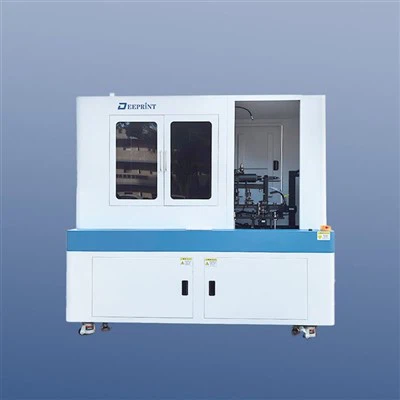
If you’re tired of messing around with printing machines that can’t handle your cylindrical products, feel free to reach out to talk through your needs. We can walk you through the different models, talk about materials, batch sizes, and what kind of finish you’re looking for, so you can get the right machine for your business without wasting time or money on something that doesn’t fit.
Tumbler Printer References:
- "Industrial Printing Technologies for Curved Substrates," International Journal of Printing Science and Technology, 2021.
- "Comparison of Printing Methods for Cylindrical Packaging," Packaging Technology and Science, 2019.
- "UV Curable Inks for Flexible and Curved Substrates," Journal of Coatings Technology and Research, 2020.
Shenzhen Deeprint Technology Co., Ltd.
As one of the most professional cylinder printing machine manufacturers and suppliers in China, we’re featured by quality products and good service. Please rest assured to buy customized cylinder printing machine made in China here from our factory. Contact us for free sample.
Address: 6-1, Huangwu Road, Tongle Community, Baolong Street, Longgang District, Shenzhen City 518100,China.
E-mail: ellen@uvdprint.com
WebSite: https://www.uvd-print.com/
