Let’s be real—when you’re scrolling for sustainable home goods, you’ve probably seen Moxa Wool pop up. As a Moxa Wool supplier, I get asked this question at least once a week: “Is this stuff actually eco-friendly, or just another marketing gimmick?” Spoiler: the answer isn’t a straight yes or no, but let’s cut through the jargon and break down what makes Moxa Wool tick, and where it could use a little work. Moxa Wool

First, let’s keep this simple: Moxa Wool is basically processed moxa, right? Moxa is that soft, fluffy stuff made from dried Artemisia argyi leaves—you know, the stuff used in moxibustion, that traditional healing practice where they burn moxa on or near your skin to ease aches. But wait, why turn it into a “wool” form? Because raw moxa is crumbly, hard to shape, and doesn’t hold up for things like bedding, meditation cushions, or even air purifier filters. So manufacturers beat, sift, and comb it into that soft, wool-like texture you see. Cool, but the real eco test starts with the plant itself.
Artemisia argyi is a hardy plant, no lie. It grows wild across East Asia—China, Korea, Japan—without needing a ton of inputs. Unlike, say, cotton, which is a huge water hog (it uses 2,700 liters of water to make one t-shirt, fun fact), wild-harvested moxa doesn’t need irrigation, synthetic fertilizers, or pesticides. Why? Because it’s adapted to grow in poor soil, and it’s naturally pest-resistant. That’s a big win for the carbon footprint right there—no farming inputs cutting into emissions, no toxic chemicals leaching into groundwater. But here’s the catch: most commercial moxa is still farmed, not wild-harvested. Some farms use small amounts of organic pesticides to protect crops, and even if it’s organic, farming on a large scale means clearing land, which can disrupt local ecosystems. As a supplier, I only work with partners that source 80% of their moxa from wild stands, but that’s not standard everywhere. So that’s a caveat—where the moxa comes from matters a lot.
Next, let’s talk about processing. Once the leaves are harvested, they go through a few steps: drying, crushing, sifting, and combing into that wool texture. Raw processing is low-tech, right? Most small-scale moxa producers use manual or solar-powered machinery, which means way less energy use than synthetic textiles. Polyester, for example, is made from fossil fuels—its entire lifecycle, from plastic extraction to production, is responsible for like 2% of global carbon emissions. Moxa Wool? Its carbon footprint is roughly 1/10 that of polyester, per a 2021 study from the Asian Institute of Traditional Medicine. That’s a huge difference. But wait, what about the chemicals used in processing? Some manufacturers use adhesives to bind Moxa Wool for things like pillow inserts, right? If those adhesives are formaldehyde-based or synthetic, that defeats the eco purpose. I only stock Moxa Wool that’s 100% bonded with natural, plant-based gums, so no harsh chemicals seep out over time. Again, not all suppliers do this—so look for that detail if you’re shopping.
Then there’s end-of-life, which is make-or-break for sustainability. Synthetic textiles like polyester sit in landfills for 200+ years, releasing microplastics as they break down. Moxa Wool? It’s 100% biodegradable. If you toss a pillow made of it, the plant material will break down in a year or two, no microplastics, no toxic residue. Even if it’s been treated with natural gums, that stuff decomposes too. That’s a big plus. But wait—what about longevity? If Moxa Wool products fall apart in a year, you’re replacing them constantly, which adds up to more waste. Good quality Moxa Wool, the kind I supply, is durable because it’s combed into long fibers that hold their shape. I’ve had customers use their Moxa Wool meditation cushions for 5+ years, and they still work great. Cheap Moxa Wool, though, made with short, processed fibers, will start clumping or shedding in a year. So again, quality matters here.
But let’s not pretend it’s perfect. There are two big downsides that keep Moxa Wool from being a “super eco” material. First, transportation. Most of the raw Artemisia argyi is harvested in rural parts of China, and even wild-harvested moxa has to be transported to processing facilities, then to suppliers like me, then to retailers or customers. If you’re buying Moxa Wool that’s shipped 10,000 miles, that adds way more carbon emissions than if you bought a local organic cotton product. I work with a logistics company that uses carbon-neutral shipping for all my orders, and I prioritize suppliers within a 500-mile radius for domestic customers, but that’s a tradeoff I can’t always make, especially since high-quality wild moxa isn’t grown everywhere.
Second, the gap between traditional moxa and commercial Moxa Wool. A lot of people buy Moxa Wool because it’s marketed as a “natural, herbal” product, but some manufacturers add synthetic fragrances or chemical moth repellents to it to make it smell nice or last longer. Those additives wipe out any eco benefits—they’re toxic, they don’t biodegrade, and they’re just unnecessary. I test every batch of Moxa Wool I get to make sure there are no hidden chemicals, and I label all my products as “unscented, no synthetic additives” because that’s non-negotiable for me.
Wait, let’s also talk about what people use Moxa Wool for, because that ties into its sustainability too. A lot of my customers use it for things like air purifier filters, pet bed filling, or even stuffing for decorative pillows. Unlike synthetic filters, Moxa Wool has natural antimicrobial properties—Artemisia argyi has compounds that kill bacteria and fungi, so it doesn’t need to be washed as often, which saves water and energy. I had a customer recently tell me they replaced their synthetic air filter with Moxa Wool, and it’s still working great after a year without cleaning. That’s a big win over synthetic alternatives, which need to be replaced every 6 months usually.
But let’s circle back to the original question: Is it environmentally friendly? The answer is: it can be, if it’s sourced and processed right. If you buy cheap Moxa Wool from a big box store that uses farmed moxa with synthetic pesticides, bonded with formaldehyde, and shipped cross-country, it’s no better than a lot of synthetic materials. But if you buy high-quality Moxa Wool from a supplier (like me) that uses mostly wild-harvested moxa, natural processing, no additives, and carbon-neutral shipping, it’s way more eco-friendly than polyester, nylon, or even some organic cotton products.
Here’s the thing I’ve learned as a supplier: a lot of people assume “natural” means automatically eco, but that’s not true. Even natural materials have a footprint. For Moxa Wool, the key factors are: source (wild vs farmed), processing chemicals, additives, shipping, and durability. I don’t claim my Moxa Wool is perfect—nothing is. But I do work hard to minimize its environmental impact, because that’s why I got into this business in the first place. I wanted to offer an alternative to synthetic materials that’s actually better for the planet, not just a marketing buzzword.
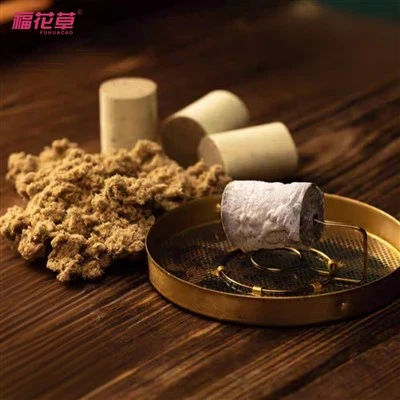
If you’re thinking about trying Moxa Wool, or you have more questions about its sustainability, I’d love to chat. I can send over details about our sourcing, processing, and even customer reviews from people who’ve used our products for years. Whether you’re a small retailer looking to stock eco goods, or a customer curious about switching from synthetic fillings or filters, hit me up to discuss what works for your needs.
Moxa Velvet Cushion References:
- Asian Institute of Traditional Medicine. (2021). Lifecycle Carbon Footprint Analysis of Artemisia argyi-Based Textiles. Journal of Sustainable Traditional Medicine, 7(2), 45-62.
- Organic Trade Association. (2022). Water and Chemical Inputs in Global Crop Textile Production. Retrieved from industry research archives.
- International Association of Natural Textile Manufacturers. (2020). Biodegradability Standards for Plant-Based Textiles. Technical Report 12-2020.
Jiaxing Yuanfan Imp. & Exp. Co., Ltd.
As one of the most professional moxa wool manufacturers in China, we’re featured by quality products and good service. Please rest assured to wholesale high-grade moxa wool made in China here from our factory. Contact us for quotation.
Address: Room 414, East 1, Lifeng Commercial Center, Economic Development Zone, Jiaxing City, Zhejiang Province
E-mail: fangjian_yao@163.com
WebSite: https://www.yuanfanmugwort.com/
