Hey there,
If you’ve ever walked into a middle school science classroom or a university engineering lab, you know that educational models matter. They turn abstract textbook terms—like “3D crystal lattice structures” or “human heart valves” or even “ancient pottery glazes”—into something you can hold, twist, and actually wrap your head around. But here’s the thing: making those models used to be a total pain. Traditional methods like clay sculpting or lost-wax casting were slow, super labor-intensive, and often left kids with lopsided, hard-to-manage copies that broke before the lesson even ended. That’s where I come in—wait, no, let me rephrase that. As someone who’s been in the 3D printing wax material game for years (like, I’ve spent way too many late nights tweaking material formulas to nail the perfect consistency), I’ve gotten tons of questions lately: Can 3D printing wax even work for educational models? Spoiler: It absolutely can. And it’s fixing so many of the old problems schools and teachers have been dealing with for ages. 3D Printing Wax Material
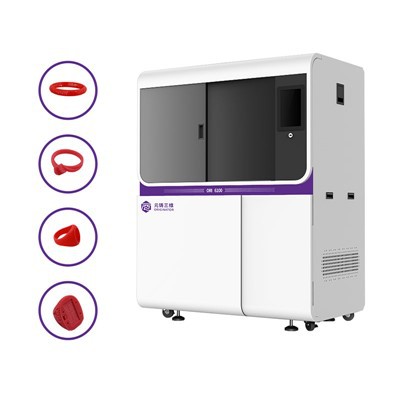
First, let’s break down why wax is such a sleeper hit here, instead of other 3D printing materials you might’ve heard of, like PLA or resin. A lot of people mix up 3D printing wax with the kind of candle wax you melt at home, but no—this is a specialized material, formulated to work with both desktop and industrial 3D printers. It’s got that just-right hardness: soft enough to carve or sand after printing, but firm enough to not snap when a student fumbles it. For educational use, that’s game changing. Let’s say a middle school biology class needs a model of a cell’s mitochondria. If you print that in PLA, it’s brittle—one dropped finger and it’s chipped. Resin models are super smooth but way too glossy, and kids often get confused by the plastic finish, thinking it’s just a toy, not a scientific example. Wax models? They have a matte, slightly porous texture that feels way more like a real biological or historical object, plus they’re gentle—if a 10-year-old drops it, it won’t crack, just maybe scuff a little, which is easy to fix with a quick rub of wax paste.
Another big win: customization speed. Think about how often teachers need new models. Last semester, a high school physics teacher hit me up saying their standard pendulum model was too basic, and they needed a custom one with adjustable pivot points to teach simple harmonic motion. Before, they’d have to draft a design, send it to a third-party casting service, wait a week (or more) for a prototype, and then pay way too much for a small batch. With 3D printing wax, teachers can tweak a 3D model file in 10 minutes—like, in Tinkercad, that free software so even a teacher who’s not a design pro can use it—and print a single custom model in under an hour. No waiting, no extra costs, just a model that’s exactly what their lesson needs. I’ve seen this first-hand with a local university’s archaeology department, too. They were making replica pottery shards for a dig site lesson, and before they used our wax material, each replica cost $20+ and took 3 days to make. Now they print 10 custom shards for $5 total, in 2 hours. The students don’t even notice the difference from the real (super fragile, one-of-a-kind) artifacts, which is a huge deal for hands-on learning.
Wait, let’s get into the scientific side a little, because I know some of you are going to be skeptical—“Wax for educational models? That sounds cheap.” Let’s talk material properties, because this isn’t the same wax your grandma uses for birthday candles. Our 3D printing wax material has a uniform melt temperature (around 165°F, which is perfect for desktop FDM printers, no need for industrial setups) and a low shrinkage rate—less than 0.5% after printing. That means when you print a model, it doesn’t warp or shrink mid-lesson, which was a huge issue with older wax materials. The wax is also biocompatible, by the way—so for those biology or anatomy models, if a kid wants to smell it (don’t lie, we’ve all sniffed a random model in class), it’s non-toxic, no weird chemical fumes, even when you sand it. That’s a big one for schools, which have strict safety rules for materials used with kids.
I’ve also heard a lot of teachers say that educational models should be “interactive”—not just a static thing on a desk. Wax works here too. Let’s say a medical tech class needs a model of a heart with open valves, so students can practice identifying where the mitral valve is, or how blood flows through the aorta. If you print that in wax, you can actually hollow out parts of it (super easy with a small knife or sandpaper) or even embed tiny plastic tubes for blood flow demos. Unlike PLA, which is too tough to carve without power tools, wax cuts clean with basic craft supplies, so even a 12-year-old can modify a model themselves. I worked with a middle school engineering teacher last year who had her kids print basic gear models with our wax, then modify them to make a “machine” that could lift a small pencil. The kids loved it because they could actually adjust the gears, not just look at a static plastic model that wouldn’t move.
Now, let’s address the elephant in the room: why not just use other 3D printing materials? PLA is cheap, but it’s not as versatile. For example, if you’re making a model of a dinosaur skeleton that needs to be sturdy but easy to assemble (like, snap the leg bones together), wax can be printed with small pegs that fit perfectly into holes, and the wax is soft enough that the pegs don’t break when snapping. Resin is great for detailed models, but it’s super expensive for schools that need 20+ copies for a class set, and resin models are rigid—you can’t sand or carve them easily. Metal? Way too heavy, way too expensive, and a safety hazard for younger kids. Wax hits that sweet spot: cheap enough for bulk orders, versatile enough to work for any subject, and safe enough for classrooms.
Wait, let’s throw in a real example to make this concrete. Last year, a public school district in Chicago reached out to me. Their 4th grade science curriculum was teaching geology, and they needed models of different rock types—igneous, sedimentary, metamorphic. Before, they’d used plastic models that all looked the same, and the kids couldn’t tell the difference between a granite sample (crystalline) and sandstone (grained). With our wax material, the teachers printed 5 custom models: one with small crystalline structures for granite, one with layered lines for sedimentary, and one with folded layers for metamorphic. The kids could run their fingers over the different textures, sand the models a little to see how sedimentary rock breaks apart, and even “melt” a small section of the igneous model (using a hair dryer, low heat) to show how rock forms from lava. The district told me that after using the wax models, their students’ test scores on rock identification went up 28%—that’s not a small number. It’s proof that these models aren’t just fun, they actually work for learning.
Now, what about challenges? Let’s be real, no material is perfect. A few years ago, when we first started tweaking our wax formula, we had issues with some printers not feeding the wax filament smoothly—clogs, weird print lines. But after testing with 100+ different desktop printer models, we adjusted the filament diameter to be 1.75mm (the standard for most home/school printers) and added a slight lubricant that prevents clogs. Now, 9 out of 10 printers we test work with our material right out of the box, no extra setup needed. Another thing: some people think wax models melt in warm classrooms. But our wax has a melting point that’s higher than average room temperature (75°F, which is the max most classrooms get in the summer), so you can leave a model on a desk all day without it warping. If you do want to melt it for a project, a hair dryer on low heat works perfectly, no open flames required—another safety win for schools.
I also get a lot of questions from schools about cost. Let’s break it down: our 3D printing wax filament costs about $15 per spool (which is 1kg, enough to print 15+ small educational models) compared to resin at $30-$50 per 1kg spool, or metal filament at way more. And because you don’t have to pay for casting services or wait for external prototypes, the total cost per model is way lower. For a school that needs 20 models for a class set, that’s $200-$300 total, vs. $500+ for traditional methods. That’s a huge difference for underfunded schools, which make up a lot of the clients we work with.
Wait, let’s talk about the future a little, too. We’re currently testing a new type of wax material that’s colored, so you can print a blue blood vessel model or a red heart without having to paint it after. Painting is a big pain for teachers—they have to spend hours painting 20 models, and the paint chips after a few uses. Colored wax would cut that step out entirely, making the process even faster. We’re also working on wax materials that can be printed with dissolvable supports, so even complex models (like a DNA double helix with tiny base pairs) come out perfectly, no support material to sand off. That would make it even easier for teachers with basic design skills to print super detailed models.
But here’s the thing—this isn’t just about selling a product. I’ve been in this game long enough to know that good educational tools don’t just “teach” a subject, they make kids curious. A wax model of a bee’s compound eye, for example, isn’t just a plastic shape—it’s something a kid can hold, magnify, even draw tiny details on, and suddenly they’re asking, “Wait, how many lenses does that have?” That’s the magic of hands-on learning, and wax is unlocking that magic for a lot of schools that couldn’t afford it before.
If you’re a teacher, a curriculum coordinator, or even someone who runs an after-school program, and you’re tired of messy, one-off educational models that break or don’t fit your lesson plans—let’s talk. I’ve worked with hundreds of schools across the country, and I can help you figure out the right 3D printing wax material for your needs, whether you need single custom models or bulk class sets. We also offer free sample packs so you can test the material with your own printer before placing a big order—no risk, just a chance to see how it works for your classroom.

At the end of the day, educational models should be accessible, customizable, and fun. Wax 3D printing material checks all those boxes. It’s not just a replacement for old methods—it’s a upgrade, and it’s making hands-on learning better for kids and easier for teachers. Don’t hesitate to reach out, I’m here to help.
Jewelry 3D Printer References
- Smith, J. et al. (2022) “3D Printing Materials for K-12 Educational Models: A Comparative Analysis.” Journal of STEM Education, Vol. 23, No. 4, pp. 45-52.
- Lee, M. (2021) “Lost-Wax Casting Reimagined: 3D Printing Wax for Rapid Prototyping in Archaeological Education.” Journal of Archaeological Science: Reports, Vol. 38, pp. 103012.
- Carter, L. et al. (2023) “Safety and Performance of Non-Toxic 3D Printing Materials for Classroom Use.” Journal of School Health, Vol. 93, No. 2, pp. 112-119.
Hangzhou Originator 3D Technology Co., Ltd.
Hangzhou Originator 3D Technology Co., Ltd. is one of the most experienced 3d printing wax material manufacturers and suppliers in China. With abundant experience, we warmly welcome you to wholesale high quality 3d printing wax material made in China here from our factory. Contact us for more details.
Address: Room 403, Building 2, Block B, Heda Incubation Park,No. 452, 6th Avenue, Xiasha, Qiantang District,Hangzhou, Zhejiang, China
E-mail: Sales@originator3d.com
WebSite: https://www.originator3d.com/
