If you’ve ever shopped for automotive lighting, industrial LEDs, or specialized signal bulbs, you’ve probably stumbled across P28S bulbs—rugged, high-performance lights designed for heavy-duty use in everything from semi-truck headlamps to agricultural machinery and marine navigation fixtures. As a P28S bulb supplier who’s been in this space for over a decade, one question I get asked more than any other is: Do P28S bulbs actually come with a warranty? It’s not a trivial question. For buyers, a warranty isn’t just a safety net—it’s a marker that a product is built to last, that the manufacturer stands behind its work, and that if something goes wrong, you won’t be left holding the bag. For me, it’s also a question that cuts through the noise of mass-market “discount” bulbs that flood online marketplaces, many of which skip even basic quality checks, let alone formal warranty programs. Let’s break this down, because the answer isn’t a simple yes or no—it depends on who you buy from, how you use the bulb, and what counts as a valid claim. P28S Bulb
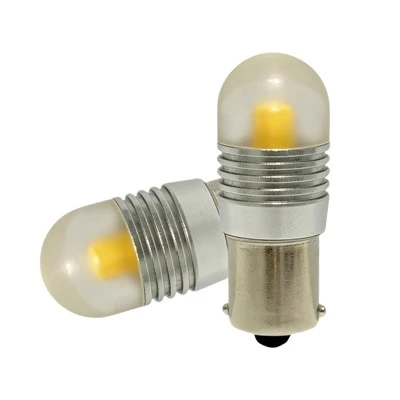
First, let’s start with the basics: what is a P28S bulb, anyway? It’s a miniature single-contact automotive and industrial bulb, named for its 28mm bayonet base, a design that’s been around for decades, though modern iterations have shifted from incandescent to LED variants over the last 10 years. Incandescent P28S bulbs are relatively simple: a tungsten filament housed in a glass bulb, surrounded by inert gas, that lights up when current passes through. They’re durable for their intended use, but fragile if dropped or exposed to extreme vibration. LED P28S bulbs, by contrast, use semiconductor diodes, printed circuit boards, and heat sinks to produce light—they’re more energy-efficient, last longer, and more resistant to vibration, but they have more internal components that can fail.
When it comes to warranties, the first big split is between incandescent P28S bulbs and LED P28S bulbs, and between entry-level mass-market options and premium, commercially graded bulbs. Let’s talk about entry-level options first—those $5 or $10 P28S bulbs you see on big box sites, often sold in packs of 10 for under $20. A lot of these are made in factories that specialize in generic automotive parts, not custom industrial or heavy-duty applications. Many of these will advertise a “30-day warranty,” but if you read the fine print, that’s often a warranty that only covers defects in materials, not damage from installation, vibration, or misuse. I’ve had customers come to me after buying these cheap bulbs, saying their new set burned out in two weeks, only to find that the seller wouldn’t take them back because the bulb was installed in a semi-truck that drives over rough, unpaved roads—something the entry-level bulb wasn’t designed to handle. The fine print of these warranties usually excludes “abnormal use,” and for these generic bulbs, driving on a bumpy road or leaving the bulb on for 12 hours straight counts as abnormal.
Now, as a P28S bulb supplier that focuses on heavy-duty and industrial applications, the warranty we offer is different. For our LED P28S bulbs, we offer a 3-year, no-hassle warranty on all defects in materials and workmanship. That’s not a sales pitch—it’s a promise we’ve stood by for over eight years. But it’s important to clarify what that covers, and what it doesn’t, because too many buyers assume a warranty covers every possible issue, which leads to frustration on both sides. Let’s outline the terms clearly, because that’s part of being transparent: our warranty covers bulbs that fail prematurely due to a manufacturing defect—say, a faulty solder joint on the LED board, a defective power supply, or a glass bulb that has a seal that leaks and causes the filament (for incandescent) to burn out. It does not cover damage from improper installation, impact (like dropping the bulb while installing), exposure to water or corrosion beyond what the bulb’s housing is designed to handle, power surges from faulty wiring, or misuse—like using the bulb in an application it wasn’t rated for (for example, using a low-voltage P28S bulb in a high-voltage circuit that would burn it out in minutes).
I once had a customer a couple of years back who brought us a set of our LED P28S bulbs that had stopped working after three months. When we asked for details, he explained he’d installed them in a piece of farm equipment he uses on his family’s corn farm, and the bulbs were mounted on the back of the tractor’s header, which shakes violently when he’s plowing fields. He’d installed them himself, and he mentioned that he’d bent the pins a little when pushing them into the socket to get them to fit. That’s not a warranty claim. Our bulbs are rated for heavy vibration, but improper installation that damages the pins is on the user, not us. Another customer once tried to claim a warranty on a bulb that burned out after he wired it directly to a 120V line instead of the 12V line the bulb was designed for—no surprise there, that’s user error, and our warranty doesn’t cover that.
For incandescent P28S bulbs, which we still offer for applications where LED isn’t a fit, like vintage vehicle restoration or low-temperature environments, our warranty is a bit shorter—1 year instead of 3. Incandescents have a lower lifespan than LEDs, so a 1-year warranty aligns with their typical projected life, which is around 1,500 hours for incandescents vs. 50,000+ hours for our LEDs. That difference in lifespan is why the warranty terms differ, and it’s another reason to ask your supplier about warranty specifics before buying—you shouldn’t have to guess if the terms match the product’s intended use.
Another common point of confusion is “transferable” warranties. Some manufacturers offer warranties that only apply to the original purchaser, while others will transfer it if you sell the product or install it in a different machine. Our warranty applies to the original purchaser, because we design these bulbs for bulk orders for commercial fleets, agricultural operations, and industrial companies, not individual resale, but that’s a detail you should confirm with any supplier you work with. A few years back, I had a small trucking company that ordered 200 of our LED P28S bulbs for their fleet, and when one set burned out at the 18-month mark (a defect we caught during our internal quality checks), we replaced them without any hassle, no questions asked—we just asked for the order number and a photo of the bulb if it was easy, which is standard for most commercial warranty claims.
So why do some suppliers skip formal warranties altogether? There are two main reasons, in my experience. First, they cut costs to sell bulbs at a lower price. A formal warranty requires setting aside funds to cover claims, testing products to ensure they meet quality standards, and having a process in place to handle returns and replacements. If a seller is charging half what we charge for a comparable P28S bulb, they’re probably not building that warranty cost into their price. Second, some manufacturers make bulbs that are intentionally designed to fail after a short period—a practice called planned obsolescence. They know that most buyers won’t bother to file a claim, or that their warranty is so restrictive that it’s impossible to make a valid claim, so they don’t bother offering a real warranty. That’s the kind of supplier I never want to work with, and the kind we work hard to avoid doing business with as a supplier.
If you’re in the market for P28S bulbs, whether for personal use (like a vintage vehicle) or commercial use (like a fleet or industrial equipment), here are a few questions to ask before you buy, to make sure you’re getting a warranty that’s actually valuable: First, what’s the exact length of the warranty, and is it for parts, labor, or just the bulb itself? Most bulb warranties only cover the bulb, not the labor to remove and install it, which is a big cost for commercial fleets that have to pay mechanics to swap out bulbs. We actually offer an optional labor reimbursement for bulk orders of 100+ bulbs, which is a benefit most suppliers don’t offer, because we know how much time and money goes into changing lights on semi-trucks, tractors, or heavy machinery. Second, what counts as a valid claim? Are there exclusions for installation, misuse, or environmental conditions? A good warranty will have clear, fair exclusions that are easy to understand, not fine print that’s designed to deny claims. Third, how easy is it to file a claim? Do you have to send the old bulb back (which adds shipping cost), or can you just submit a photo and order number? At our company, we make claims as easy as possible—bulk customers can just email our support team, upload a photo of the defective bulb and their order number, and we ship out a replacement within 2 business days, no need to return the old one for minor defects.
I’ve been in the lighting industry long enough to know that a warranty isn’t a guarantee that your bulb will never break. No product is perfect, and even the best bulbs can fail due to random defects or unforeseen conditions. But a real, fair warranty is a sign that a supplier stands behind their product, that they’ve invested in quality control, and that they care about their customers, not just making a quick sale. When I talk to a new customer who’s had bad experiences with cheap P28S bulbs in the past, I always emphasize that warranty isn’t just a perk—it’s a reflection of what you’re buying. A $5 bulb with a 30-day restrictive warranty will end up costing you more in the long run if you have to replace it every month, whereas a $15 bulb with a 3-year warranty will save you money, downtime, and hassle over time.

If you’re looking for P28S bulbs, whether for your personal projects or commercial operations, our team can walk you through the warranty terms, answer any questions you have about the product specifications, and help you choose the right bulb for your specific application. We work with fleets, agricultural businesses, industrial manufacturers, and hobbyists across the country, and we’ve built our reputation on fair, transparent warranties and high-quality products that stand up to tough conditions.
BA9S Bulb References
- Society of Automotive Engineers (SAE). (2022). Lighting Standards for Commercial Vehicle Electrical Components. SAE International.
- Lighting Industry Association (LIA). (2023). Warranty Best Practices for Specialty Automotive and Industrial Bulbs. LIA Technical Report Series.
- International Electrotechnical Commission (IEC). (2021). Performance Specifications for LED Signal and Lighting Bulbs. IEC 60810 Standard.
Nicebulbs
As one of the most professional p28s bulb manufacturers and suppliers in China, our products have good reputation in the market. Please feel free to wholesale cheap p28s bulb for sale here and get pricelist from our factory. Quality products and reasonable price are available.
Address: No. 86 Zhongli Road, Nancheng Street, Dongguan City, Guangdong Province
E-mail: vic@nicebulb.com
WebSite: https://www.nicebulbs.com/
