If you’ve ever stood in a granulation plant on a cool, damp morning, watching lumpy, uneven material clump up on conveyor belts or stick to processing equipment, you know how frustrating it is to waste hours fixing avoidable issues. For nearly two decades, I’ve been a single drum dryer supplier, and in that time, I’ve seen countless granulation teams pour resources into outdated drying systems that either underperform, overspend on energy, or leave finished product inconsistent. Today, I want to pull back the curtain on single drum dryers for granulation—what makes them work, why they outperform alternatives for most granulation applications, and how to make sure you’re getting one that actually fits your process. Single Drum Dryer

Let’s start with the basics, because too many people I talk to confuse single drum dryers with other industrial dryers, like double drum or tray dryers, and that mix-up leads to bad decisions. A single drum dryer is a direct-contact, rotary drying system with a large, hollow, steam-heated (or sometimes hot-oil heated) cylindrical drum that rotates slowly. A small applicator roll or spray nozzle coats a thin, even layer of wet, granulated material onto the drum’s outer surface. As the drum turns, the material adheres to it, and indirect heat from the inside of the drum transfers through the metal to evaporate surface moisture. Once the material dries to its target moisture content (usually 2-5% for granulation, depending on the end use), a scraper blade mounted right next to the drum’s surface peels it off in thin, flaky sheets. Those flakes are then milled or ground back into a uniform granule, ready for packaging or further processing.
What makes this design ideal for granulation? Granulation is a process where fine powders are bound together into larger, stable particles—think fertilizer granules, pharmaceutical excipients, animal feed pellets, or detergent bases. The core needs for granulation drying are: consistent moisture content, minimal degradation of heat-sensitive materials, uniform particle size after drying, and energy efficiency. Single drum dryers check all these boxes better than alternatives in most cases.
Take heat sensitivity, for example. A lot of granulated products—especially pharmaceuticals, food ingredients, and some specialty fertilizers—can’t handle high temperatures for long periods. Spray dryers, a common alternative, use extremely hot air (often 300°F+), which can break down delicate compounds like enzymes, vitamins, or certain active pharmaceutical ingredients (APIs). Tray dryers are even worse, often requiring 12+ hours of exposure to moderate heat, which can degrade materials. Single drum dryers? The material only spends 10 to 30 minutes in contact with the heated drum, and the heat transfer is efficient, so drum surface temperatures typically range from 120°F to 300°F, depending on the material. For heat-sensitive products, we can even adjust the heating medium to hot oil instead of steam, keeping temperatures even more consistent and lower. That short contact time is a game-changer for preserving product quality.
Then there’s the consistency of the final granule. When you coat a thin, even layer of wet granulation material onto the drum, the drying happens uniformly across the entire layer—no hot spots, no under-dried clumps in the middle of a batch, no over-dried fines on the edges. Compare that to fluidized bed dryers, another popular option, where air flow variations can leave some particles too wet and others too dry, leading to inconsistent granule hardness or solubility. A single drum’s scraper removes the dried material as a thin, uniform flake, which mills into a granule with a consistent particle size distribution—something that’s non-negotiable for granulation applications, where irregular size can cause flow issues in packaging or inconsistent performance.
Energy efficiency is another big win. I’ve had plant managers tell me they were spending $20,000 a month on energy for their old tray drying system, and switching to a single drum dryer cut that bill by 40% or more. Why? Because single drum dryers use indirect heat, so almost all the heat generated by the steam or hot oil goes directly to drying the material—unlike spray dryers, which waste a lot of energy heating large volumes of air that get vented out. Even better, the scraped flakes from the drum are hot, so we can insulate the dryer and recover some of that residual heat to pre-heat incoming wet material, boosting efficiency even more. For mid-sized to large granulation operations, that savings adds up quickly.
But here’s the thing: not all single drum dryers are built the same. I’ve seen too many plants buy cheap, off-brand dryers that look similar on the outside but fail within two years, or underperform so badly they end up buying a second dryer to make up for it. Let me break down the features I look for when specifying a single drum dryer for granulation, and what to avoid.
First, drum design and material. The drum is the heart of the dryer. It needs to be thick enough to maintain uniform heat across its entire surface—if it’s too thin, you’ll get hot spots where the metal warps, leading to uneven drying. For granulation materials that are corrosive, like certain fertilizer or detergent granulates, you also need the drum to be made of food-grade or high-grade stainless steel, not carbon steel. Carbon steel drums corrode over time, leading to metal flaking that contaminates your product, especially critical for pharmaceutical or food applications. I always recommend 316L stainless steel for most granulation jobs, as it’s resistant to corrosion, easy to clean, and holds up to repeated scraper contact.
Next, the applicator system. This is the part that coats the wet granulation material onto the drum, and it’s make or break for consistent drying. A bad applicator will leave thick, lumpy areas on the drum, leading to under-dried material and wasted product. For granulation, you need an applicator that can produce a thin, uniform layer (usually 1/8 to 1/4 inch thick, depending on the material’s moisture content). There are two main types of applicators: the submerged roll and the spray nozzle. Submerged rolls are better for high-viscosity wet granulation slurries, like those used in fertilizer or animal feed, because they evenly distribute thick material without clogging. Spray nozzles work well for lower-viscosity slurries, like pharmaceutical excipients or some food granulates, but you have to use high-pressure, atomizing nozzles to get a uniform coating—cheap nozzles will clog often, leading to downtime.
Then there’s the scraper system. The scraper needs to be rigid enough to peel the dried flake off the drum consistently, but also adjustable to account for wear over time. A flimsy scraper will leave residual material on the drum, leading to buildup that throws off drying uniformity and can contaminate the next batch. I always specify scrapers made of high-grade stainless steel or even tungsten carbide for abrasive granulation materials, like those with high silica content in certain industrial fertilizers. We also build our dryers with adjustable scraper tension, so operators can tweak it as the blade wears, extending the blade’s life and maintaining performance for years.
Another critical feature is the control system. Too many old dryers have manual controls, where an operator has to monitor the drum temperature, rotation speed, and scraper position all day, leading to human error. Modern single drum dryers for granulation should have automated PLC (programmable logic controller) systems that adjust rotation speed, heating medium flow, and even applicator pressure based on real-time moisture sensors in the dried flake. That means if your wet granulation slurry’s moisture content fluctuates slightly from batch to batch, the dryer automatically adjusts to keep the final product’s moisture consistent—no more wasted batches from human error. I can’t tell you how many plants I’ve visited where manual control led to 5-10% of product being rejected due to moisture issues; upgrading to an automated single drum dryer cuts that rejection rate to less than 1%.
Now, let’s talk about common use cases for single drum dryers in granulation, because that’s where most people get stuck wondering if this system is right for their specific product. Let’s break down a few:
-
Pharmaceutical granulation: This is one of the most common applications. Single drum dryers are perfect for drying wet granulated API blends or excipients, because they’re gentle on heat-sensitive compounds, produce uniform granules, and are easy to clean (essential for GMP compliance). Many pharma plants switch from tray dryers to single drum dryers to meet production demands without sacrificing product purity. We recently installed a set of single drum dryers for a generic drug manufacturer that was producing 1,200 tons a year of granulated acetaminophen; before, their tray drying system required two 12-hour shifts a day, and they were seeing 8% product rejection. After switching, they cut drying time to 2 hours per batch, reduced rejection to less than 1%, and saved $18,000 a month on energy.
-
Fertilizer granulation: Granulated NPK (nitrogen, phosphorus, potassium) fertilizers are another big use case. Single drum dryers handle the high-viscosity wet slurries common in fertilizer production, and the short drying time prevents ammonia loss, which is a huge issue with longer drying methods. We’ve also modified our dryers for specialty fertilizers, like organic fertilizers made from compost or manure, adding enclosed vent systems to capture and process odors, which is a major concern for fertilizer plants in residential areas.
-
Animal feed granulation: Feed granulation requires consistent particle size and high nutrient retention, especially for vitamins and enzymes. Single drum dryers don’t expose feed to the extreme heat or long drying times that can break down these nutrients, so feed manufacturers see improved product quality and can charge a premium for their granulated feed. A livestock feed plant in the Midwest I work with switched to a single drum dryer last year, and they reported a 7% increase in customer satisfaction because their granulated feed had more consistent flow and nutrient levels.
But single drum dryers aren’t for every granulation operation. If you’re producing very fine, low-viscosity slurries that spray well, or if you need to dry extremely large batches (over 5 tons per hour, though some of our larger models handle that), a spray dryer or fluidized bed dryer might be a better fit. Also, if you’re working with a material that has extremely high moisture content (over 80% by weight), you might need a pre-dryer before sending it to the single drum, though most granulation slurries fall between 40-60% moisture, which is perfect for single drum drying.
One question I get all the time is about maintenance. I’ve had plant managers worry that a moving part like the drum will mean a lot of downtime, but the reality is that single drum dryers are one of the lowest-maintenance drying systems for granulation. The main parts to watch are the scraper blades (which last 6-12 months with regular use, depending on the material) and the drum’s heat transfer surfaces, which can be cleaned with a non-abrasive solution every 1-2 years to prevent buildup. We include a yearly maintenance check for all our customers, and we stock replacement parts so we can ship them within 24 hours if something does go wrong. Over the 10 years we’ve been in business, our average uptime for single drum dryers is 96%, which is way higher than many competing systems.
If you’re currently dealing with under-dried granulation product, high energy bills, or frequent downtime from your current drying system, a single drum dryer could be the solution you’ve been looking for. As a supplier, we don’t just sell equipment—we work with you to design a dryer that fits your specific granulation process, from small pilot-scale models for R&D to large industrial dryers for full-scale production. We can run test drying on your actual granulation material in our in-house lab to show you exactly how our dryer will perform, so you can make a decision with full confidence.
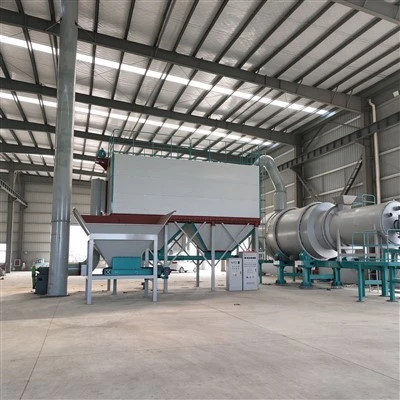
I’ve seen first-hand how a good single drum dryer can transform a granulation operation: reducing waste, cutting costs, and improving product quality. The last thing you want is to keep wasting time and money on a drying system that was outdated before it was installed. If you’re ready to learn more about how a single drum dryer can work for your granulation process, reach out to our team to discuss your needs.
Twin Shaft Paddle Mixer References
Perry, R. H., & Green, D. W. (Eds.). (2008). Perry’s Chemical Engineers’ Handbook (8th ed.). McGraw-Hill.
Mujumdar, A. S. (2014). Handbook of Industrial Drying (4th ed.). CRC Press.
Smith, R. (2016). Energy Efficiency in the Process Industries. Wiley.
FDA. (2022). Current Good Manufacturing Practice (CGMP) for Finished Pharmaceuticals. U.S. Food and Drug Administration.
Patton, T. C. (2019). “Drying of Granular Materials: Selection of Optimal Drying Technology.” Chemical Engineering Progress, 115(5), 32-38.
Zhengzhou Tongding Machinery Equipment Co., Ltd.
Zhengzhou Tongding Machinery Equipment Co., Ltd. is one of the most professional single drum dryer manufacturers and suppliers in China, featured by quality products and good price. Please rest assured to buy CE approved single drum dryer made in China here and get quotation from our factory. Also, customized service and 5 years warranty are available.
Address: Kexue Avenue Industrial Park, Xingyang City, Zhengzhou City, Henan Province
E-mail: admin@tongdingmachine.com
WebSite: https://www.td-machinerygroup.com/
