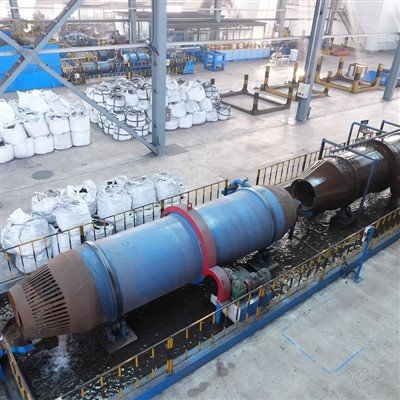
If you’ve ever stepped into a modern manufacturing plant—say, a facility producing automotive components, pharmaceutical packaging, or consumer electronics—you might not notice the row of stainless steel bins, precision feeders, and modular conveyors humming along overhead. But stop for a minute: those pieces of equipment aren’t just moving materials from point A to point B. They’re the unsung backbone of automated production, and as a feeding and conveying equipment supplier, I’ve spent 18 years seeing how a single misconfigured feeder can halt an entire assembly line, while a well-tuned system can boost efficiency by 40% or more. Feeding & Conveying Equipment
A few years back, I visited a small contract manufacturer in the Midwest that makes plastic caps for over-the-counter medications. They’d invested $2 million in a fully automated assembly line for cap and bottle seals, but within six months, it was only running 52% of the time. The culprit? A cheap, generic bowl feeder they’d bought online to deliver caps to the assembly station. It was prone to jamming with flimsy, thin-walled caps, and its speed was inconsistent, which caused the line’s robotic pick-and-place arms to misalign parts, leading to scrap and repeated pauses. When we swapped in a custom-designed vibratory feeder with a tuned track that gently guided caps into the correct orientation, not only did jam rates drop by 95%, but line uptime jumped to 88%. That’s when it hit me: feeding equipment isn’t an afterthought in automation—it’s the link between raw materials and finished products that makes every other piece of machinery work.
Let’s break down the core roles feeding and conveying equipment plays in automated production, starting with the most basic: reliable part orientation and presentation. For any automated assembly, the machine needs parts in a consistent, usable position—whether that’s a screw pointing up, a circuit board facing forward, or a small cylindrical bearing aligned for insertion. Human workers can sort and orient parts without thinking, but machines can’t. Bowl feeders, the most common type of feeding equipment, use vibration, gravity, and precision-engineered tracks to turn random, loose parts into a steady stream of correctly oriented components. For delicate parts, like glass vials for lab tests or tiny electronic connectors, we design feeders with soft, food-grade or medical-grade materials to prevent chipping, scratching, or contamination—something generic feeders can’t handle.
Beyond orientation, feeding equipment solves a problem automation can’t: variability. Manufacturing parts, even those produced to tight tolerances, have minor differences—maybe a plastic molding has a slight warp, or a metal stamping has a burr. A great feeding system is built to account for that variability. It doesn’t just move parts; it adapts. Some modern feeders use vision sensors to scan each part as it moves along the track, rejecting defective pieces or reorienting misaligned ones before they reach the assembly station. In the automotive industry, where parts range from 1-inch bolts to 3-foot long steel beams, we design modular conveying systems that can handle both small and large loads, adjusting speed and pressure to match the line’s needs. Without that adaptability, even the most advanced robotic arms can’t operate efficiently.
Another critical role is synchronization. Automated production lines are a dance of dozens of machines working in perfect time—fillers, welders, inspectors, packers all need materials delivered exactly when they’re needed, not a second late or early. If a conveyor is too fast, parts pile up at the assembly station and cause jams; if it’s too slow, the line starves, and workers or robots sit idle. Our company works closely with line engineers to program feeders and conveyors to sync with the line’s PLC (programmable logic controller) system, which coordinates every machine’s timing. For example, in a beverage canning line, the feeding conveyor delivers empty cans to the filler at a rate of 1,200 per minute, while a separate feeder delivers lids at the same pace—one misalignment here and the entire line slows down. We’ve seen plants that wasted $100,000 a year in downtime because their feeding systems weren’t synchronized, just by upgrading to a PLC-integrated conveying system, they recovered most of that cost in six months.
Then there’s contamination control, a non-negotiable role in industries like pharmaceuticals, food processing, and medical device manufacturing. In these sectors, even a tiny bit of debris or cross-contamination can ruin a batch of product, leading to recalls, regulatory fines, and damaged brand reputation. Feeding and conveying equipment for these industries is constructed from materials like 316 stainless steel, which is easy to sanitize and resists corrosion, and designed with no hard-to-clean gaps where bacteria or product residue can build up. For a customer making injectable drug vials, we installed a hygienic conveying system that eliminates sharp corners and uses closed loops to keep vials sealed from outside contaminants. Before that, they were finding trace amounts of dust on 0.2% of vials, which meant reprocessing every 10 minutes. After the upgrade, that number dropped to near zero, and they passed their FDA audit on the first try.
Of course, feeding equipment also drives scalability. Many manufacturers start with a small automated line, then expand as demand grows. Generic feeders can’t scale—they’re either too small for increased production or can’t handle new parts. Custom feeding and conveying systems are built to grow with a business. We’ve designed modular conveyor lines that can be extended by adding sections, and feeders that can be reprogrammed to handle new part sizes without replacing the entire unit. A customer in the consumer electronics space started with a line making smartphone chargers, then expanded to make wireless earbuds a year later. Instead of buying all new equipment, they upgraded our feeder’s track insert to handle smaller, irregular earbud parts, and adjusted the conveyor speed to match the new line’s output. That saved them over $50,000 compared to a full equipment replacement.
Now, I know some in the industry think feeding equipment is just a commodity—something you can pick up from a catalog without much thought. But the truth is, a feeding system is only as good as its understanding of a manufacturer’s specific needs. Last year, we had a customer that made outdoor gear components, like tent poles and buckles. They came to us with a problem: their existing feeder for tent pole springs was breaking the thin metal springs 15% of the time, leading to high scrap rates. We worked with their engineers to analyze the spring’s geometry, material, and weight, then designed a feeder with a variable vibration setting that moves springs gently instead of forcing them along the track. We also added a sensor that counts springs to ensure the right number are delivered per tent assembly, which cut scrap from broken springs by 92%. That’s not just selling a piece of equipment—that’s solving a problem that impacts their bottom line.
Looking ahead, the role of feeding and conveying equipment in automation is only going to grow. As factories adopt Industry 4.0 technologies, like IoT sensors and predictive maintenance, feeding systems are evolving too. Modern feeders have built-in sensors that track vibration levels, part counts, and jam rates, sending data back to the line’s management software. That means maintenance teams can fix a small issue before it causes a line shutdown—no more waiting for a machine to fail during a production run. We recently installed a predictive maintenance system on a line for a food packaging customer; now, their maintenance team gets an alert a full week before a feeder is likely to jam, so they can schedule repairs during off-hours, avoiding $20,000 in weekly downtime.
But even with all these advances, the core role of feeding equipment remains the same: to reliably move, orient, and present parts so the rest of the automated line can do its job. Without it, you can have the best robots, the most precise welders, or the most efficient inspectors, but they’re useless if they don’t have the right part, in the right place, at the right time.

If you’re running an automated production line and noticing bottlenecks, high scrap rates, or unexpected downtime, the feeding system is almost always the place to start. Our team has worked with hundreds of manufacturers across industries to design custom feeding and conveying solutions tailored to their specific needs, from small contract shops to large Fortune 500 facilities. Whether you’re looking to upgrade an existing line, build a new automation system, or just troubleshoot a recurring problem, we can help you assess your setup, identify gaps, and implement a solution that boosts your efficiency, reduces waste, and keeps your line running smoothly. Reach out to our team to discuss your needs and get a customized consultation for your production facility.
Grinding Media References
- Association for Manufacturing Technology (AMT). "Automation Equipment and Line Efficiency." 2022.
- Food and Drug Administration (FDA). "Guidance for Industry: Manufacturing Equipment and Processes for Drug and Biologic Products." 2019.
- Robotics Industries Association (RIA). "Automated Feeding Systems: Design and Implementation Best Practices." 2021.
- International Organization for Standardization (ISO). "ISO 13485: Medical Devices – Quality Management Systems." 2016.
Shenyang Muren Machinery Co., Ltd.
As one of the most professional feeding & conveying equipment manufacturers and suppliers in China, we’re featured by quality products and good price. Please rest assured to wholesale durable feeding & conveying equipment from our factory. We also accept customized orders.
Address: No.16 Nansan Road, Shenyang Jinhai Economic Zone, Liaoning Province, China
E-mail: mulunjixie@163.com
WebSite: https://www.symurens.com/
