Hey everyone, if you’ve ever worked with fluid transfer systems—whether it’s in construction, manufacturing, agriculture, or even food processing—you’ve probably heard the term “flexibility factor” thrown around when talking about steel wire hoses. As someone who’s been selling steel wire hoses for over 12 years now, I get it—it can sound like just another industry jargon, but trust me, it’s one of the most important specs you need to nail down when picking the right hose for your job. Let’s break this down in plain, no-BS terms, no confusing textbook fluff, and no AI-style long-winded rants that make you zone out. Steel Wire Hose
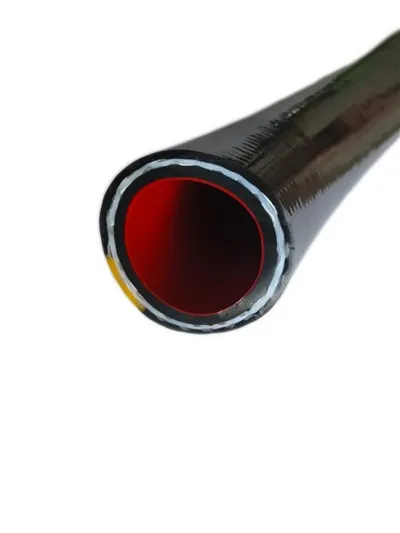
First off, let’s get one thing straight: the flexibility factor of a steel wire hose isn’t some random number we pull out of thin air to make sales pitches sound fancy. It’s a measured, quantifiable value that tells you exactly how easy (or hard) that hose is to bend without kinking, cracking, or damaging the reinforced steel wire that’s the whole point of these hoses in the first place. For anyone who’s ever wasted hours fighting a stiff hose that keeps popping back into a straight line or kinks so bad it stops flowing fluid, you know how big a deal this is. I’ve had customers call me at 7 PM on a Friday panicking because their old hose failed mid-job, and 9 times out of 10, it was a flexibility mismatch—they used a super-stiff hose that couldn’t make the tight bend required for their setup, and boom, leak.
So how do we actually measure this? I get that some of you are like “who cares, just tell me if it’s bendy” but understanding the basics will help you make a smarter choice next time. Flexibility factor is typically calculated by taking the minimum bend radius of the hose (that’s the tightest circle you can bend it into without permanent damage or performance loss) and dividing that by the hose’s outer diameter. Yeah, it’s a simple ratio, but it’s way more useful than just saying “this hose is bendy.” Let’s put numbers to it to make it real: if a hose has an outer diameter of 2 inches and a minimum bend radius of 4 inches, its flexibility factor is 2. Lower numbers mean stiffer hoses, higher numbers mean way more flexible ones. Wait, hold up—wait, no, let me make that clear: lower flexibility factor value = stiffer hose, higher value = more flexible. Don’t mix that up, I still see new guys on my team getting confused on that.
Now, what actually affects this flexibility factor? Because not all steel wire hoses are the same—duh, that’s why we have different types. First up, the steel wire reinforcement itself. If you’ve got a single wire braid vs. a double wire braid, that changes everything. Double braided hoses are way stronger, but they’re also stiffer—their flexibility factor is lower than a single braid of the same diameter. Then there’s the wire gauge: thinner steel wires mean the braid can move and flex easier, so higher flexibility factor, but thinner wires can handle less pressure, so there’s a tradeoff every time you adjust that spec. I always tell customers: you can’t just prioritize flexibility over pressure rating, that’s a quick way to end up with a hose that bursts mid-operation.
Next, the inner tube material. Wait, you might be thinking “steel wire hose, so it’s all steel?” No way—most steel wire hoses have a rubber or thermoplastic inner liner that touches the fluid. If that liner is a rigid material like some hard rubber compounds, it’s going to make the whole hose stiffer, lower flexibility factor. But if it’s a more pliable material like EPDM or polyurethane, it’ll bend easier, higher flexibility factor. And then there’s the outer cover too—thicker covers for abrasion resistance add weight and stiffness, so they’ll drop the flexibility factor a bit, while thinner, lighter covers give more bendability.
Let’s talk about real-world examples, because that’s where this stuff matters most. Take a construction site where a hose has to snake around steel beams, concrete forms, and heavy machinery—you need a high flexibility factor here, something that can make tight turns without kinking. I recently had a contractor order 50 of our single braid steel wire hoses with a flexibility factor of 4.2 for exactly that job; he texted me a week later saying it was the first hose that didn’t give him grief on those tight corner runs. Compare that to a mining application, where a hose has to handle super high pressure and tons of heavy, sharp rocks slamming into it—they need double braid hoses, even though their flexibility factor is lower (like 2.8), because the extra stiffness from the second braid makes it way more durable under high pressure and abrasion. That tradeoff is non-negotiable for those jobs—you can’t have a super bendy hose that bursts when you’re pumping slurry at 300 PSI.
I know a lot of you are probably asking: why can’t I just go by “this hose is more flexible”? Because “flexible” is subjective. A hose that’s perfect for a construction site might be too bendy (read: not stiff enough) for a manufacturing line that needs to hold a consistent shape under pressure. The flexibility factor gives you a standardized number to compare apples to apples between different hoses, regardless of brand or size. No more guessing if Hose A’s “great flexibility” is actually better than Hose B’s “medium flexibility”—you just pull up their specs, calculate (or look up the published factor, we post all of ours on our site) and see which one fits your needs.
Wait, let’s bust a common myth here: a higher flexibility factor doesn’t mean a worse hose, or a less durable hose. I see that all the time. Some people think “if it bends easy, it must be flimsy” but that’s not true. It just means it’s engineered for a different use case. We make some specialty high-flex steel wire hoses for the food and beverage industry, where they have to bend around conveyor belts and mixing equipment, and their flexibility factor is 5.0—super bendy, but they use a heavy-duty 316 stainless steel wire braid (way more corrosion-resistant than standard steel) so they still hold up to repeated bending, food-grade cleaning chemicals, and pressure up to 250 PSI. It’s not a weaker hose, it’s a hose designed for a job that requires moving around, not sitting in a straight line all day.
So how do you use this flexibility factor when picking a hose for your project? Let’s walk through the steps, since I know that’s what you actually came here for. First, figure out the minimum bend radius you need for your setup. That’s easy—just measure the tightest bend your hose has to make, right? Like, if your hose runs from a pump mounted on a wall to a tank 3 feet away, but it has to loop around a 6-inch diameter pipe, your minimum bend radius is 3 inches. Then take that number and divide it by the hose’s outer diameter. Wait, no—wait, if you have the flexibility factor, you can rearrange that: minimum bend radius = flexibility factor × outer diameter. So if you have a hose with a 2-inch outer diameter and a flexibility factor of 4, that gives you a minimum bend radius of 8 inches—so that’s the tightest you can bend it. That’s way simpler than guessing.
Also, keep in mind that temperature affects flexibility too. Flexibility factor is usually published at room temperature, right? If you’re working in extreme cold, like winter construction in Minnesota, rubber liners get stiffer, so the flexibility factor will drop a bit. We always tell customers to add 10-15% to their required flexibility factor if they’re working below freezing, because the hose won’t bend as easy when it’s cold. And if you’re working with really hot fluids, like in industrial ovens, the liner might be more pliable, so flexibility factor goes up a little—just don’t take that as a free pass to bend it way tighter than the minimum, the steel braid can still get damaged even if the rubber is soft.
Let me share a mistake a customer made last year to drive this home. A guy from a local trucking company ordered a bunch of steel wire hoses for his fuel pumps, and he picked the cheapest, highest flexibility factor hose he could find, thinking “more bendy = better for routing.” Well, he installed them, and a week later, half of them were leaking. Turns out those high flexibility factor hoses were single braid, and fuel pump lines run at 400 PSI—way over the single braid’s pressure rating. Because the thinner wires that made the hose bend easy couldn’t handle the pressure, so they stretched and cracked, even if the hose was flexible. That’s why you can’t ignore other specs when looking at flexibility factor—it’s a piece of the puzzle, not the whole game.
As a supplier, we don’t just throw a flexibility factor number on our hoses and call it a day. We test every batch of hoses we ship to make sure their flexibility factor is exactly what we publish, because we know how much this matters to our customers. I’ve had customers switch to our hoses from other brands because their hoses had wildly different flexibility factors than advertised—like, a brand said their hose had a flexibility factor of 4, but when we tested it, it was actually 3, which meant it was way stiffer than promised, and they had to redo all their hose runs. That’s the kind of headache we work to avoid by being transparent with our specs.
Now, if you’re scratching your head right now thinking “okay, I get flexibility factor, but how do I know what number I need for my job?” Let’s give some rough guidelines to make it easy. For general purpose fluid transfer where bends are moderate, you’re looking for a flexibility factor of 3 to 4. For tight, complex routing, like industrial equipment or food processing lines, you want 4 to 5. For super high-pressure applications that still need some bend, like hydraulic lines in construction equipment, it’s 2 to 3. And if you have really large diameter hoses, like 6 inches or more, you’ll probably need a higher flexibility factor, around 5 to 6, because big hoses get way stiffer as they get wider, so you need a higher ratio to make them manageable.
Wait, one last thing: don’t confuse flexibility factor with kink resistance. That’s another big one. Kink resistance is how likely the hose is to fold over on itself when bent, like a garden hose that gets stepped on. Flexibility factor is about bending radius, not kinking. A hose can have a high flexibility factor (easy to bend) but still kink if you bend it too sharply beyond its minimum radius. That’s why the flexibility factor number is there—it tells you exactly how sharp you can bend it without kinking or damaging it.
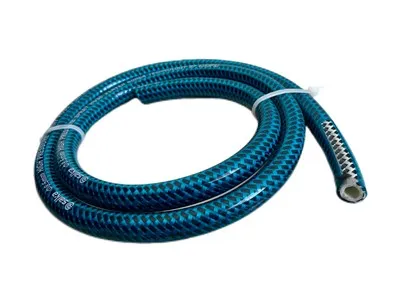
At the end of the day, the flexibility factor of a steel wire hose is all about matching the hose to your specific needs. It’s not just a number for engineers to play with—it’s what separates a hose that makes your job easier, no leaks, no downtime, from one that’s a constant frustration. We’ve been in this game long enough to know that downtime costs you way more than buying the right hose the first time, and flexibility factor is a key part of getting that right.
PVC Suction Pipe If you’re not sure what flexibility factor you need for your next project, or you want to check the specs on any of our steel wire hoses, just hit us up. We don’t do confusing sales scripts—we’ll ask you about your application, your pressure needs, your temperature, how tight your bends are, and we’ll point you to exactly the right hose, no guesswork, no overselling. We’ve got hoses for every job, from small food grade lines to large mining slurry hoses, all with clear, tested flexibility factors so you know exactly what you’re getting. Don’t waste another weekend fighting a stiff, leaky hose—reach out, let’s find the right fit.
References
- American Society for Testing and Materials (ASTM) D3816, Standard Specification for Rubber Hoses, Wire-Reinforced, for Petroleum Products
- Hose Manufacturers Association (HMA) Technical Bulletin: Flexibility and Bend Radius of Reinforced Hoses
- Steel Wire Reinforced Hose Design and Application Guide, Industrial Fluid Power Association (IFPA)
Weifang Xinzhiyuan Plastic Co., Ltd.
As one of the most experienced steel wire hose manufacturers and suppliers in China, we offer a wide range of products with superior quality. Please feel free to wholesale premium steel wire hose made in China here from our factory. We also accept customized orders.
Address: No. 700, Tongle Street, Economic Development Zone, Changle County, Weifang City, Shandong Province
E-mail: hua@xzypvchose.com
WebSite: https://www.pvchose-xzy.com/
