If you’ve ever searched for custom machining services, chances are you’ve landed on pages asking, “Do you provide CNC turning for stainless steel?” It’s a question we hear at our CNC turning service almost every day—and for good reason. Stainless steel is one of the most versatile, widely used materials across industries, but its unique properties make it tricky to machine. Too many shops claim they can handle stainless steel, only to deliver parts with rough finishes, dimensional errors, or even tool damage. That’s why I’m breaking down exactly what goes into our stainless steel CNC turning process, why it matters for your project, and how we make it work reliably every time. CNC Turning Service
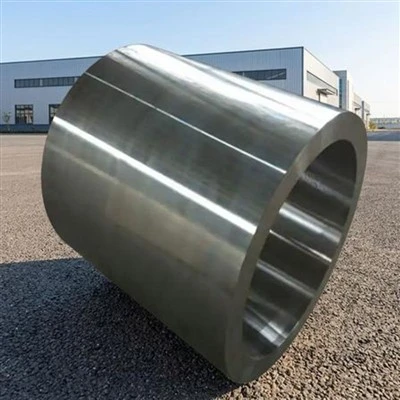
First, let’s get one thing straight: not all CNC turning for stainless steel is created equal. Stainless steel isn’t a single material—it’s a family of alloys defined by their chromium content (at least 10.5% by mass), which gives them corrosion resistance, strength, and heat tolerance. For turning, we work with the most common grades: 304 (the general-purpose “workhorse” for food equipment, automotive parts, and consumer goods), 316 (the marine-grade variant with higher molybdenum for saltwater resistance, used in medical devices and offshore components), and 17-4 PH (a precipitation-hardening stainless steel for high-stress aerospace and industrial parts). Each grade demands different tooling, speeds, and feeds, and cutting corners here leads to avoidable issues.
Let’s talk about the biggest challenge with stainless steel turning: work hardening. Unlike mild steel, which softens when heated, stainless steel hardens when it’s deformed—specifically, when the cutting tool presses into the surface and causes plastic deformation. If your cutting parameters are too slow, or the tool is dull, the edge will push and pull at the material instead of cutting it cleanly. This creates a layer of hard, brittle material just below the surface that makes further machining impossible, and even ruins the part’s structural integrity. At our shop, we’ve engineered our process to avoid this. We use high-speed, rigid CNC lathes with solid carbide cutting tools coated in titanium carbonitride (TiCN) or diamond-like carbon (DLC) for 300+ HB hardness, which resists wear and cuts through the hardened skin instead of creating it. We also program continuous, unidirectional cuts rather than stopping and starting mid-operation, which reduces friction and prevents the localized heating that triggers work hardening.
Another common mistake shops make with stainless steel is ignoring chip control. Stainless steel has a tendency to form long, stringy chips that wrap around the tool or workpiece during turning. Not only do these chips scratch the part’s finish, they can cause tool chatter (vibration) that leads to dimensional inaccuracies. For critical parts like medical implant components or valve parts that seal under high pressure, even a 0.001-inch variance can render the part useless. We solve this with custom chip breakers on our cutting tools and carefully calibrated feed rates. For 304 stainless, we run a feed rate of 0.008 to 0.012 inches per revolution (IPR) and a spindle speed of 300 to 800 surface feet per minute (SFM), while 316 requires a slightly slower speed (250 to 700 SFM) because its higher nickel content makes it more ductile. We test these parameters on a sample workpiece before running full orders to ensure chip flow is smooth and consistent.
Now, what kind of parts can we produce with our stainless steel CNC turning? The versatility of CNC turning means we can create everything from small, high-volume components to large, custom prototypes. For example, we’ve turned 304 stainless steel shafting for food processing conveyors, where parts need to resist rust from frequent washdowns. We’ve made 316 stainless steel valve stems for a company that distributes water treatment equipment, where corrosion resistance in chlorine-rich environments is non-negotiable. For aerospace clients, we’ve machined 17-4 PH stainless steel brackets, which require both high strength and tight tolerances (±0.0005 inches) to withstand extreme altitudes and temperature swings. Whether you need a 1-inch diameter screw for a consumer product or a 24-inch diameter flange for industrial machinery, our lathes (both horizontal and vertical) can handle it.
We also pride ourselves on post-processing that’s tailored to stainless steel parts. Many customers don’t realize that CNC turning leaves a tiny, uneven surface finish—usually around Ra 125 microinches, which is fine for some applications, but not all. For parts that need a smoother finish, like medical implants or decorative hardware, we offer secondary operations like centerless grinding, electropolishing, or passivation. Passivation is a critical step for stainless steel: it removes free iron from the surface of the part, which prevents corrosion. It’s not optional for medical or marine parts, and we make sure every order that needs it goes through a controlled bath process in our in-house finishing department, with certificates of compliance for regulatory standards like ISO 9001 and FDA guidelines.
Now, you might be wondering: why choose our CNC turning service over a larger, more general machining shop? The answer is specialization. A lot of shops process dozens of materials—aluminum, brass, titanium, and stainless steel as an afterthought. We focus exclusively on CNC turning, with 90% of our work being stainless steel parts. That means our machinists have decades of experience working with this specific material, and we’ve invested in tooling and equipment that’s optimized for it. For example, we run our lathes with 10,000 PSI through-the-tool coolant systems, which blast coolant directly at the cutting edge to dissipate heat and clear chips—something many smaller shops skip because of the cost.
We also understand that timing and cost matter. Custom parts often need to be prototyped fast, and production runs need to stay on budget. When a customer comes to us with a prototype stainless steel part, we can turn it around in 3 to 5 business days, compared to the 7 to 10 days many competitors charge. For production runs of 1,000 to 100,000 parts, we bulk-purchase stainless steel bar stock in standard and custom sizes, which cuts down material costs by 15 to 20% compared to shops that buy in smaller quantities. We also include a 100% dimensional inspection on every order, using coordinate measuring machines (CMMs) for complex parts and micrometers for simple ones, so you never receive a part that doesn’t meet your specs.
I want to address a common misconception: stainless steel turning is too expensive for small orders. While it’s true that tooling and setup costs are slightly higher for stainless steel than mild steel, we price our services based on the complexity of the part, not just the material. A simple 2-inch 304 stainless steel bolt will cost about the same as a mild steel bolt, because the turning process and material cost are comparable for basic geometries. For more complex parts, like threaded shafts with multiple diameters, we provide a detailed quote upfront, with no hidden fees or rush charges for orders that need to be delivered fast.
So, if you’ve been searching for “CNC turning for stainless steel” and you’re tired of shops that overpromise and underdeliver, our service is built for you. Whether you’re a startup prototyping a new medical device, an engineer needing replacement parts for industrial equipment, or a manufacturer expanding your product line, we have the expertise and equipment to get the job done right. Every part we machine is backed by our guarantee: if it doesn’t meet your tolerance requirements, we’ll rework it for free or refund your money.
At the end of the day, CNC turning for stainless steel isn’t just about running a lathe. It’s about knowing how to handle a material that’s both strong and tricky, how to avoid common mistakes, and how to deliver parts that work for your application. We’ve spent years refining our process to do exactly that. If you’re ready to discuss your project, whether it’s a prototype or a full production run, get in touch with our team to start a conversation about your needs. We’re here to help you turn your design into a functional, high-quality stainless steel part.
Casting Part Machining References
- Kalpakjian, S., & Schmid, S. R. (2019). Manufacturing Processes for Engineering Materials (7th ed.). Pearson Education.
- ASM International. (2008). Machining of Stainless Steels. ASM Handbook, Volume 16: Machining.
- Diniz, A. E., & Oliveira, A. J. (2006). Work hardening in stainless steel during turning: Effect of cutting parameters. Journal of Materials Processing Technology, 179(1-3), 160-165.
- ASTM International. (2020). Standard Practice for Passivating Stainless Steel Components. ASTM A967-20.
- DeVries, W. R. (2018). Analysis of Machining and Metalworking Operations (2nd ed.). Society of Manufacturing Engineers.
Ningbo Yirui Machinery Manufacturing Co., Ltd.
As one of the most professional cnc turning products manufacturers and suppliers in China, we’re featured by quality products and good price. Please rest assured to wholesale durable cnc turning products made in China here from our factory. Customized orders are welcome.
Address: No.107, Wanzhong Village, Jishigang Town, Haishu District, Ningbo City
E-mail: James.he@yiruitek.com
WebSite: https://www.yiruime.com/
